
Doodhpathri, the Valley of Milk, is Kashmir’s untouched alpine meadow in Budgam. With rolling grasslands, crystal streams, Gujjar herders, and panoramic Pir Panjal views, it offers authenticity beyond Gulmarg or Pahalgam. A must-visit on your Kashmir itinerary for raw beauty, pastoral culture, and year-round charm.
Kashmir carries countless valleys, lakes, and meadows, yet Doodhpathri stands apart with a character that feels untouched by time. Tucked in Budgam district, about 42 kilometers from Srinagar, this alpine meadow refuses to conform to postcard clichés.
Unlike the popular names Gulmarg, Pahalgam, or Sonamarg Doodhpathri whispers its charm rather than shouting it. The name translates to “Valley of Milk,” a reference born from crystal streams that froth white against stone beds.
Those who venture here discover an expanse of rolling grasslands, towering deodars, aromatic pine belts, and snow-lined ridges that stitch the landscape into a rare mosaic.
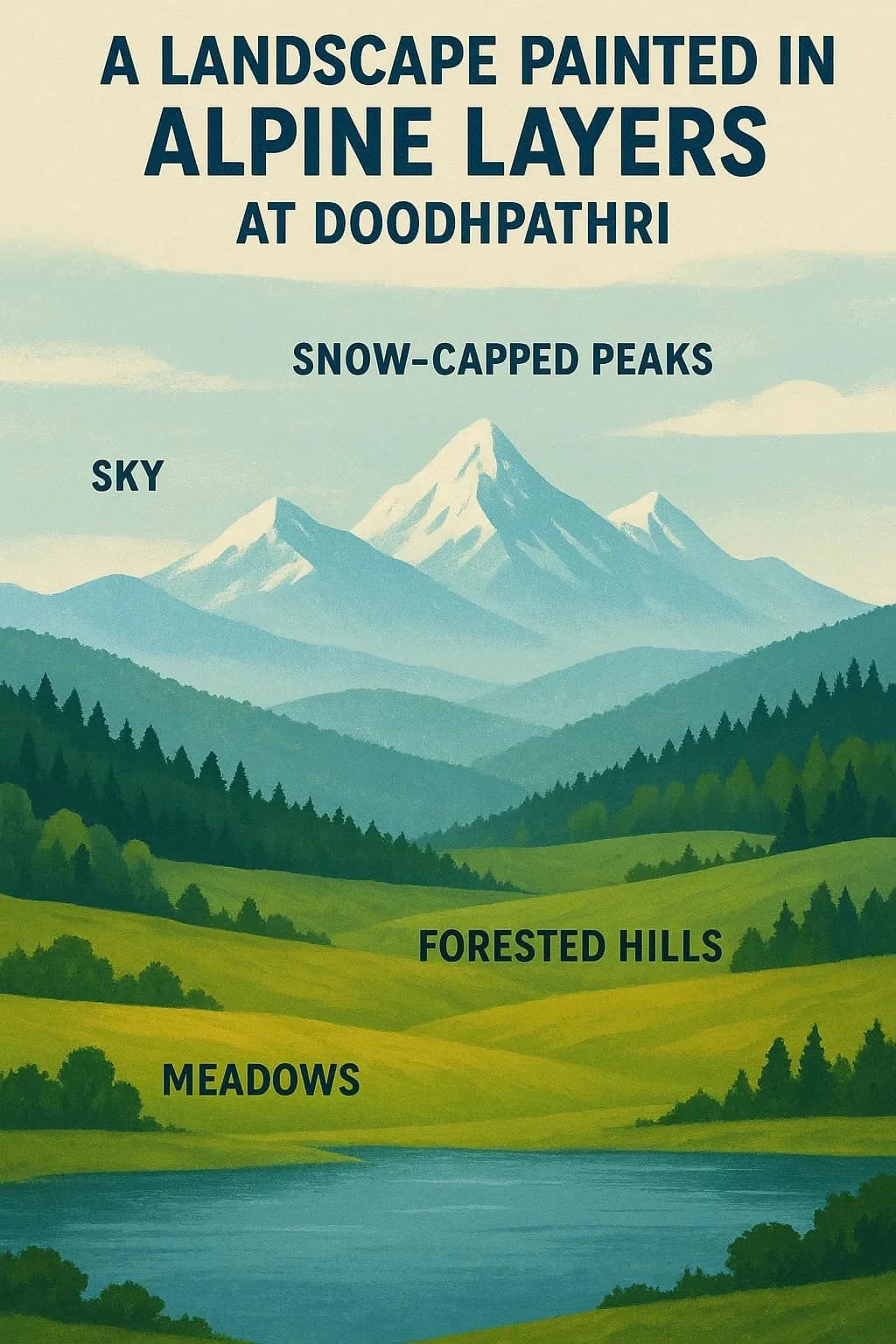
A Landscape Painted in Alpine Layers at Doodhpathri
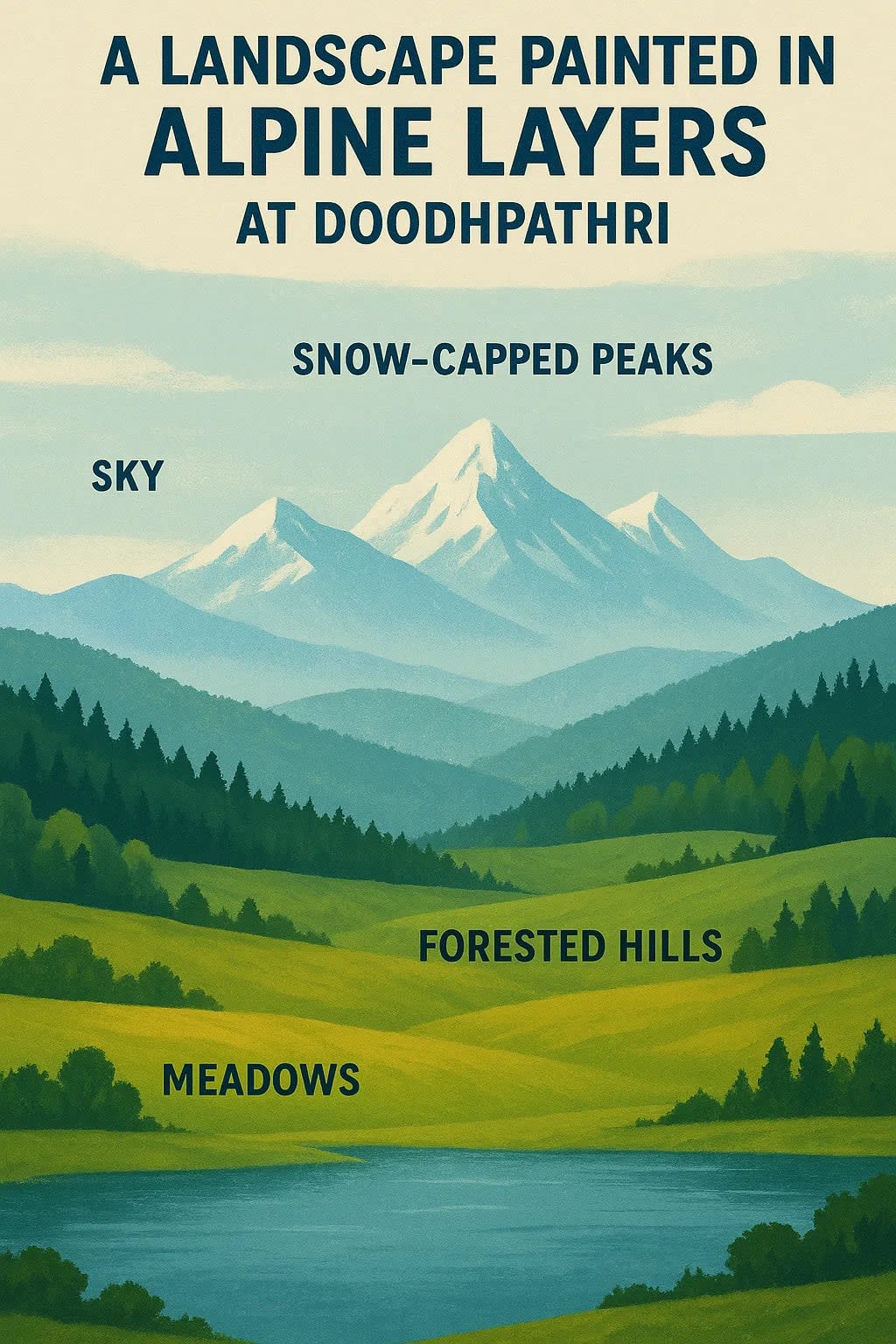
When travelers type “hidden gems in Kashmir,” the answer is often Doodhpathri and for good reason. The landscape here doesn’t reveal itself in one glance; it builds in layers that keep you hooked.
- The Foreground – Meadows Alive with Color
Step onto grass so soft it feels like velvet. In spring, Doodhpathri’s pastures explode with wildflowers yellow buttercups, white daisies, and violet irises turning every photograph into a postcard. - The Middle Ground – Forests Breathing Resin
Thick belts of deodar and pine rise like natural fortresses. They perfume the air with mountain freshness, and when light breaks through, the meadows glow in golden stripes. These forests give Doodhpathri its raw, cinematic energy. - The Background – Pir Panjal Peaks
Look up, and the Pir Panjal range commands the horizon. Snow-streaked ridges in summer, golden outlines in autumn, and dazzling white summits in winter every season creates a new frame.
Here’s the catch: unlike Gulmarg or Sonamarg, Doodhpathri’s views are not interrupted by hotels, gondola wires, or crowds. It’s just you, the meadow, and the mountains. That’s why travel photographers call Doodhpathri “Kashmir’s natural tripod.”
The Origin of the Name “Doodhpathri”
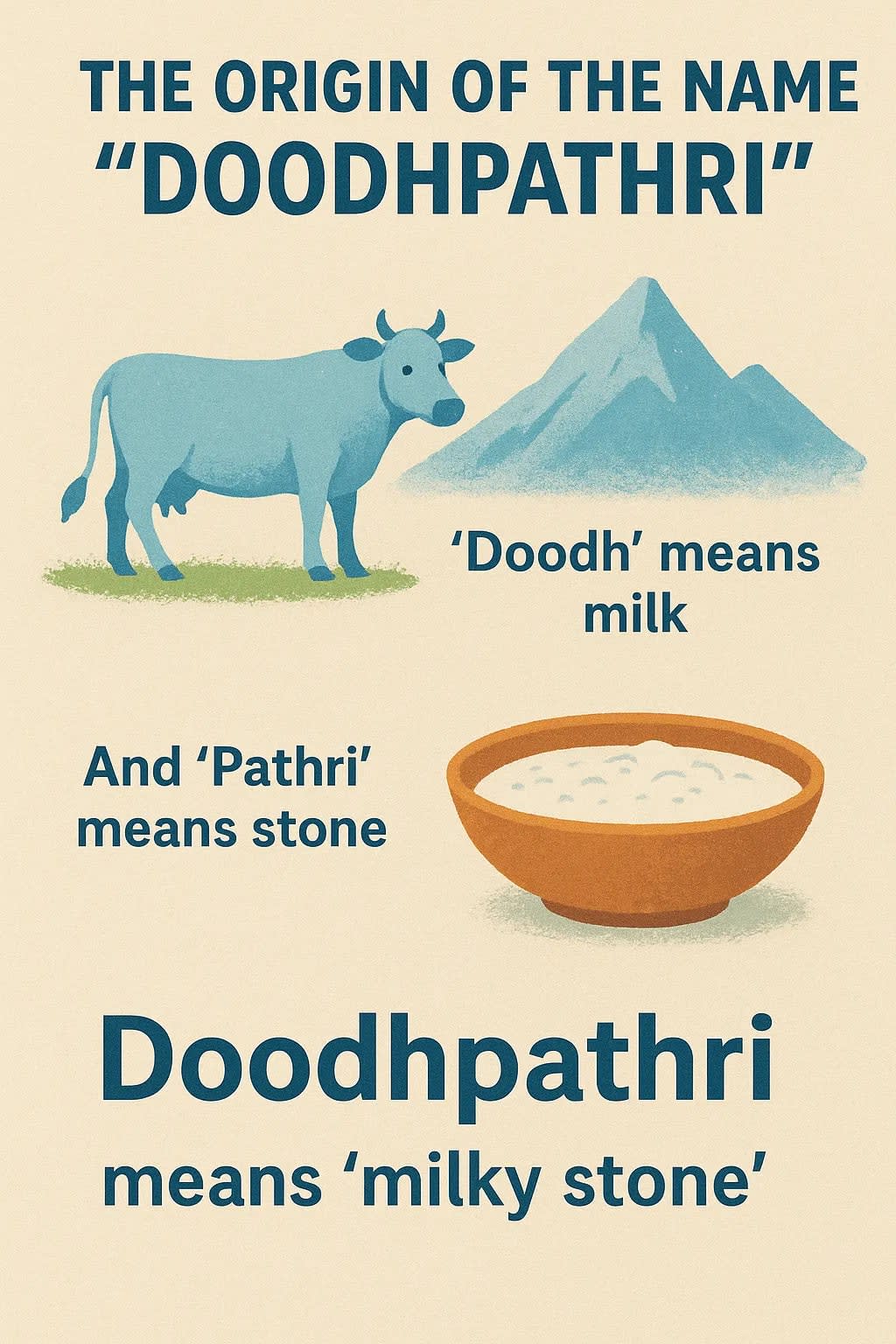
Every meadow in Kashmir has beauty, but only a few carry stories that live in the very soil. Doodhpathri is one of them. The name itself Valley of Milk isn’t a tourist invention but a piece of folklore woven into Kashmiri memory.
Centuries ago, the revered saint Sheikh Noor-ud-Din Noorani, known to locals as Nund Rishi, wandered across this alpine stretch while in meditation. Thirst pressed upon him, and he struck the ground with his staff in search of water.
What gushed out wasn’t water at first it was milk. Flowing, pure, and white against the grass. When he tried to use it, the milk transformed into a stream of crystal water, but its frothy white look remained. Since then, villagers have called this place Doodhpathri, the Valley of Milk.
What makes the story compelling is how nature itself reinforces it. Stand by the Shaliganga stream today, and you’ll notice the same foamy turbulence where water leaps over stones. In sunlight, the current shimmers like spilled milk flowing across emerald banks.
It feels less like legend and more like a landscape speaking for itself.
For travelers, this origin does more than explain a name it deepens the experience. When you walk through Doodhpathri, you’re not just stepping on grass; you’re walking a meadow that locals believe carries blessings.
Children grow up hearing the tale, herders pass it to visitors, and the stream’s milky churn keeps the legend visually alive.
That blend of story and scenery is what makes Doodhpathri different from Gulmarg or Pahalgam. Those valleys dazzle with activity, but here you find a narrative carved into water and stone an unbroken connection between folklore, faith, and the natural world.
Read More On: Packing Tips for Travel: Essentials You Shouldn’t Forget
Accessibility: A Scenic Drive Away from Srinagar
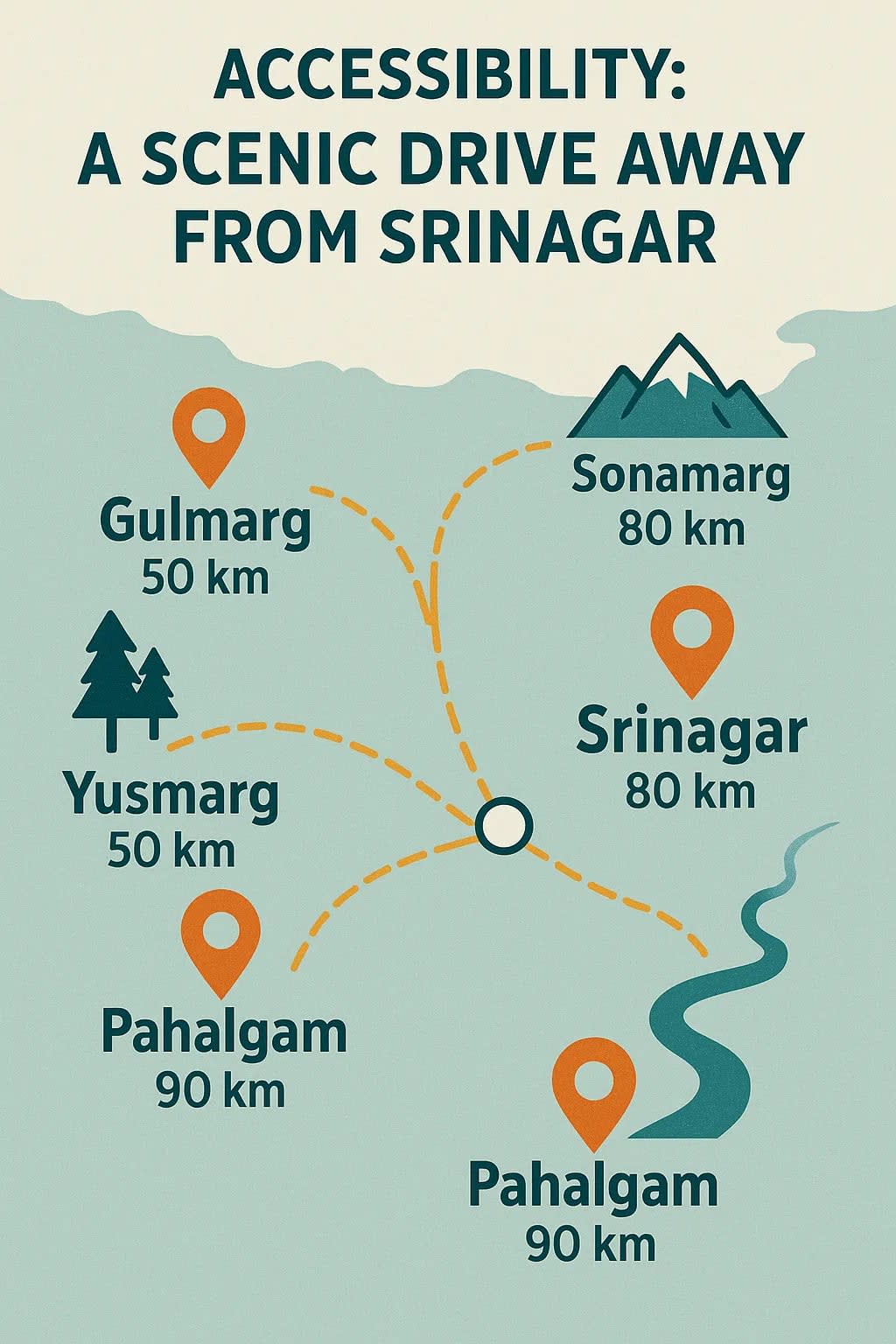
One of the reasons Doodhpathri deserves a place on your Kashmir itinerary is how easy and unforgettable it is to reach. The meadow lies only 42 kilometers from Srinagar, a journey of about 90 minutes.
Yet this isn’t just a transfer from point A to point B; the drive itself feels like a moving introduction to Kashmiri life.
Leaving Srinagar, the road first winds through Budgam’s fertile plains. In spring, mustard flowers set the fields ablaze in bright yellow, while apple orchards stretch on either side.
By autumn, the same orchards overflow with fruit, and roadside carts display red, green, and golden apples stacked like gems. Every bend seems to frame a new postcard.
As the climb begins, the scenery changes. Flat fields give way to pine corridors, and the air grows crisp with the sharp scent of resin.
Wooden houses with tin roofs appear in small hamlets, smoke curling from chimneys where families prepare noon chai. Life along this road hasn’t been polished for tourists it’s authentic, and that’s exactly what makes it powerful.
The last stretch is the most dramatic. The road narrows and curves through forested ridges. Suddenly, the trees open, and the horizon spreads wide.
Meadows roll into the distance, streams shimmer in sunlight, and the Pir Panjal peaks rise like watchtowers. That first glimpse of Doodhpathri after the winding ascent feels like a reveal a curtain lifting on an untouched alpine stage.
Practical travelers will appreciate that this route doesn’t demand extreme off-roading. Regular cars and hired cabs from Srinagar can manage it comfortably.
For those who love scenic drives, this road is among the most rewarding in Kashmir: short, smooth, and rich in detail.
In many ways, the accessibility of Doodhpathri is its secret strength. It offers wilderness without the hardship of long treks, allowing even families and casual visitors to experience a meadow that feels worlds away from the city yet is only a morning’s drive from Dal Lake.
Read More On: Kashmir Day: Facts, Timeline & Ways to Show Solidarity
Distinction from Other Meadows
Kashmir is blessed with famous meadows Gulmarg, Pahalgam, Sonamarg yet seasoned travelers who discover Doodhpathri often call it the most authentic of them all. The difference isn’t subtle; it’s felt in the atmosphere the moment you arrive.
- No Concrete Intrusion
Gulmarg dazzles with gondolas and luxury hotels, but its skyline is crowded with construction. Pahalgam bustles with markets and shops selling everything from carpets to cricket bats. In contrast, Doodhpathri remains raw. No towering hotels, no shopping strips just unbroken pastures rolling into pine forests. - The Pastoral Rhythm
Sonamarg shines with glaciers, but it often feels like a highway stopover for travelers heading toward Ladakh. Doodhpathri, instead, pulses with pastoral life. Gujjar and Bakarwal nomads set up canvas tents, cows graze on riverbanks, and the sound of cowbells mingles with rushing water. This isn’t curated for visitors it’s real mountain living, unfolding before your eyes. - Stream at the Heart
Few Kashmiri meadows weave water and grass so intimately. In Doodhpathri, the Shaliganga River cuts through the center, foaming white against smooth rocks. Wherever you wander, the stream follows, a constant companion. The result is a landscape that moves, sings, and reflects light differently at every turn. - Space and Solitude
Even in summer, when Srinagar’s houseboats are packed and Gulmarg’s gondola queues stretch long, Doodhpathri breathes space. You can walk for hours without hearing another tourist voice, only the crunch of grass and the rush of water.
This combination of wilderness, culture, and water makes Doodhpathri feel like a hidden chapter in Kashmir’s travel story. If Gulmarg is the glamorous showpiece and Pahalgam is the bustling marketplace, Doodhpathri is the quiet diary entry the part most tourists skip but the part you’ll remember longest.
Read More On: Best Kashmiri Tea Brands & Where to Buy Ingredients
Seasonal Rhythms at Doodhpathri
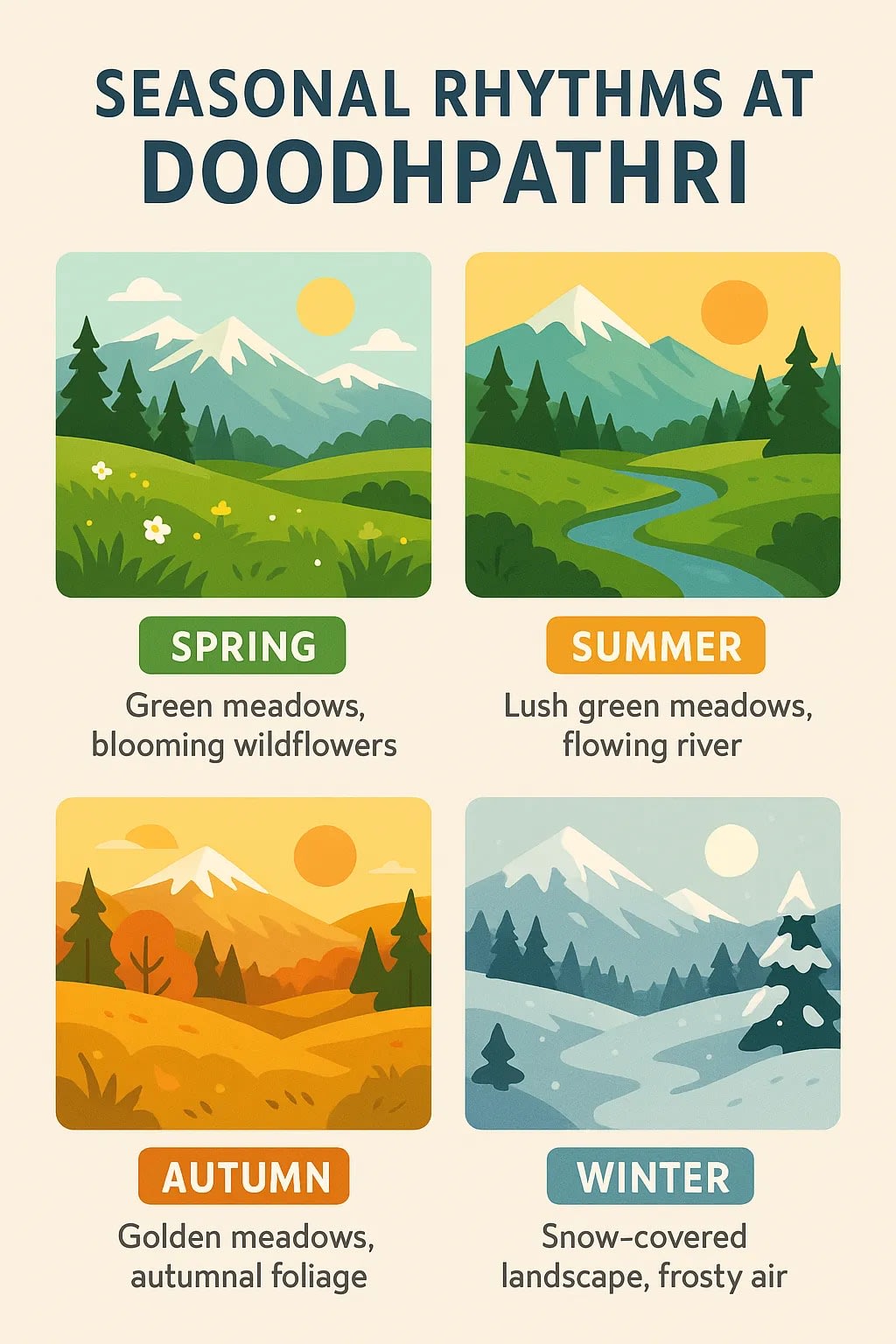
One of the most fascinating aspects of Doodhpathri is how it reinvents itself with every season.
Unlike places that look the same year-round, this meadow offers a different experience depending on when you visit. Here’s what travelers can expect:
Spring (March – May) – Meadows in Bloom
As the snow recedes, Doodhpathri bursts alive with wildflowers. Daisies, buttercups, and tiny blue forget-me-nots cover the ground like a natural carpet. The Shaliganga stream swells with fresh glacial melt, adding a sparkling soundtrack to every walk.
- Weather: Pleasant, around 10–18°C during the day, chilly evenings.
- Best for: Photographers, couples, nature lovers.
- What to Pack: Light jackets, comfortable walking shoes, a camera with a macro lens for close-up flower shots.
Summer (June – August) – The Pastoral Season
Summer is the most lively season at Doodhpathri. Nomadic Gujjar families bring their herds, setting up colorful canvas tents across the meadow. Children play by the stream, ponies graze freely, and tourists picnic under pine shade.
- Weather: Comfortable, 20–25°C by day, cool at night.
- Best for: Families, day-trippers, casual walkers.
- What to Do: Pony rides, streamside picnics, short treks to nearby ridges.
- Travel Tip: This is peak season arrive early to enjoy quieter mornings before picnic crowds arrive.
Autumn (September – October) – Golden Serenity
Grass turns golden, trees flame with amber, and the valley feels like it’s slowing down. Most tourists move on to Gulmarg or Pahalgam, leaving Doodhpathri quieter than ever. Morning mists often hug the meadows, creating a mystical atmosphere.
- Weather: Mild, around 12–20°C, nights can be cold.
- Best for: Travelers seeking solitude, meditation retreats, and offbeat explorers.
- What to Pack: Warm layers, thermals for evenings, a thermos for hot tea on the go.
Winter (November – February) – The Snow Kingdom
In winter, Doodhpathri wears a white crown. The meadows vanish under deep snow, the Shaliganga freezes at the edges, and the silence is absolute. Locals use sledges and ponies to move across the snow, while adventurous travelers trek into the valley.
- Weather: Freezing, often 5°C to 5°C, snowstorms possible.
- Best for: Adventure seekers, photographers, those who’ve already seen Gulmarg but crave raw snow landscapes.
- What to Pack: Snow boots, heavy jackets, gloves, thermals, and power banks (cold drains batteries fast).
- Travel Tip: Access may be restricted depending on snow depth check road conditions in Srinagar before heading out.
Experiences That Define Doodhpathri
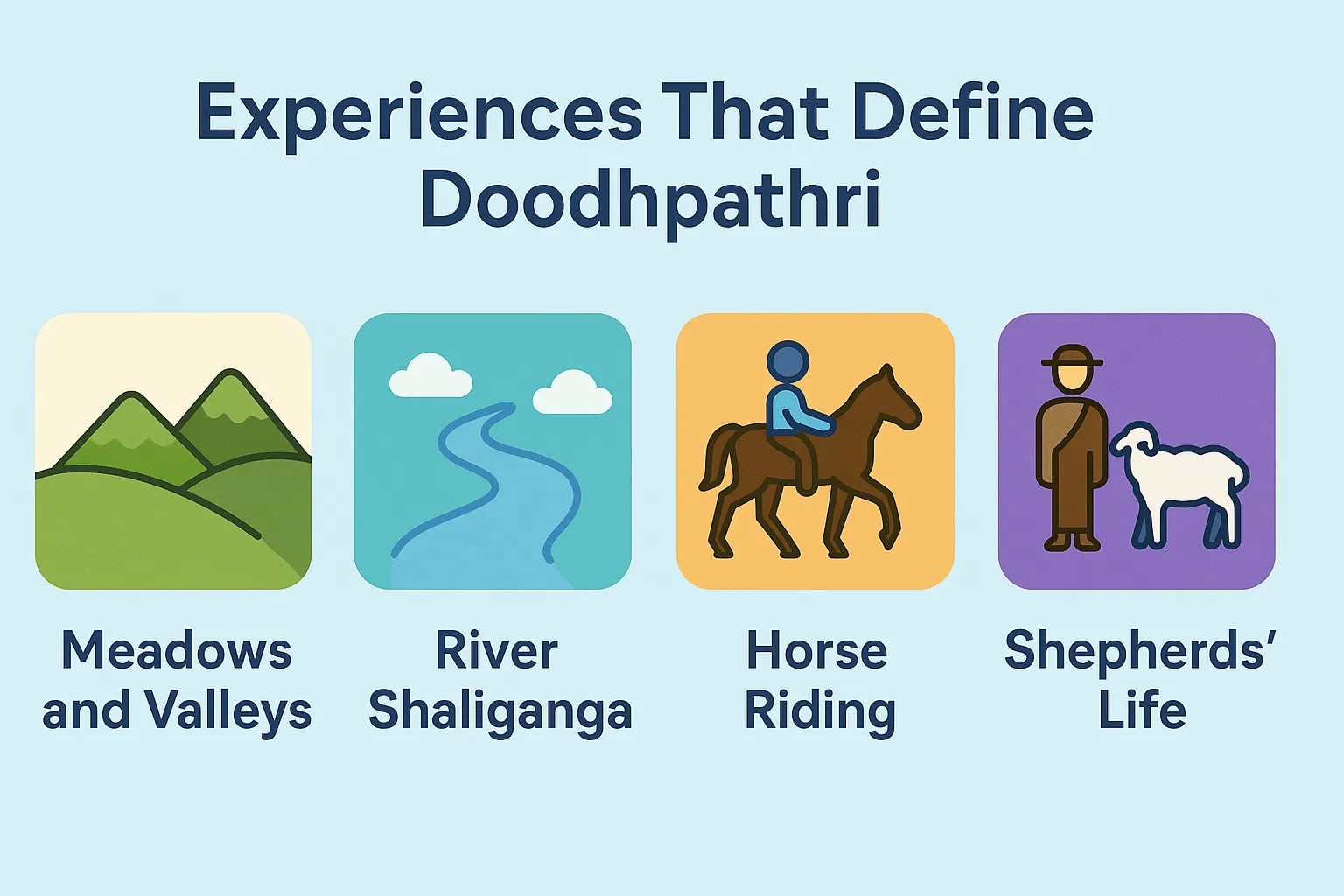
Unlike Kashmir’s popular resorts, Doodhpathri doesn’t overwhelm you with planned attractions it invites you to slow down and discover experiences in their rawest form. Here’s what travelers can actually do in this meadow:
1. Walk the Endless Meadows
There are no fixed trails here; the meadows themselves are your path. One moment you’re stepping on grass that feels like velvet, the next you’re leaping across a bubbling stream. The rolling landscape creates natural “viewpoints” where every turn feels like a discovery.
- Time Needed: 1–2 hours of slow walking.
- Traveler Tip: Wear waterproof shoes the meadows can be marshy in spring.
2. Streamside Picnics by the Shaliganga
The Shaliganga stream is the valley’s lifeline. Families often bring baskets of food, spread a mat on the grass, and enjoy lunch while the water rushes by. Trout fishing is possible in summer, though you’ll need a permit.
- What to Try: Local vendors sometimes sell hot kahwa and corn cobs roasted over woodfire.
- Traveler Tip: Bring your own picnic supplies from Srinagar; facilities inside the valley are minimal.
3. Meet the Nomadic Gujjar and Bakarwal Herders
During summer, nomadic families pitch tents across the meadow with their herds of sheep, goats, and cows. A short conversation, even with basic Urdu, opens a world of pastoral stories. Many will offer you noon chai or fresh buttermilk if you show genuine interest.
- Highlight: Watching children guide flocks across the river at dusk is unforgettable.
- Traveler Tip: Always ask before photographing people it’s a gesture of respect.
4. Pony Rides and Gentle Treks
Pony rides here aren’t just tourist gimmicks they’re part of local livelihood. For ₹400–₹800, a local horseman will guide you along ridges and riverbanks inaccessible by car. Adventurous travelers can trek toward Tosamaidan or Yusmarg, using Doodhpathri as a base.
- Duration: Pony rides 30–60 minutes; treks range from half-day to multi-day.
- Traveler Tip: Agree on the fare beforehand to avoid haggling later.
5. Winter Sledging and Snow Walks
In winter, the meadow transforms into a snowy wonderland. Locals turn wooden planks into sledges, and children invent their own skiing slopes. For visitors, simply walking across snow-blanketed meadows, with the stream half-frozen beside you, feels magical.
- Best For: Adventure lovers seeking a raw winter experience beyond Gulmarg’s ski resorts.
- Traveler Tip: Roads may close after heavy snowfall always check accessibility before setting out.
Ecology and Conservation
The magic of Doodhpathri isn’t just in its beauty it’s in its fragility. Every flower, every stream, and every pine grove here is part of a delicate ecosystem that has survived for centuries with minimal human interference. Tourism in Kashmir, if careless, could change that forever.
Alpine Flora and Medicinal Herbs
The meadows are home to medicinal plants like Saussurea costus and wild herbs used in traditional Kashmiri remedies. In spring, the ground blooms with daisies, buttercups, and wild orchids that don’t just look beautiful they also support pollinators vital for mountain ecology.
Wildlife and Birdsong
Look closely, and you might spot Himalayan monals, finches, or even eagles circling above. Small mammals like foxes and marmots inhabit the forest edges. For birdwatchers, Doodhpathri is a paradise though you need patience and silence to enjoy it.
The River as a Lifeline
The Shaliganga isn’t just scenic it nourishes everything here. It supports trout, quenches herds brought by nomads, and irrigates villages downstream. Polluting this stream would mean harming entire communities that depend on its waters.
The Rising Threat of Tourism
While Doodhpathri remains less commercial than Gulmarg or Pahalgam, more visitors mean more litter. Plastic bottles left behind, campfires damaging soil, and loud music disturbing wildlife are real problems.
How You Can Protect Doodhpathri
- Carry reusable bottles and bags leave nothing behind.
- Stick to ponies or walking instead of driving deep into the meadow.
- Avoid throwing food to animals it disrupts their natural diet.
- Keep music low; let the river and cowbells be the soundtrack.
By traveling responsibly, you’re not just a visitor you’re a guardian. Every small act of care helps Doodhpathri remain unspoiled for future generations of explorers.
Food and Local Flavors
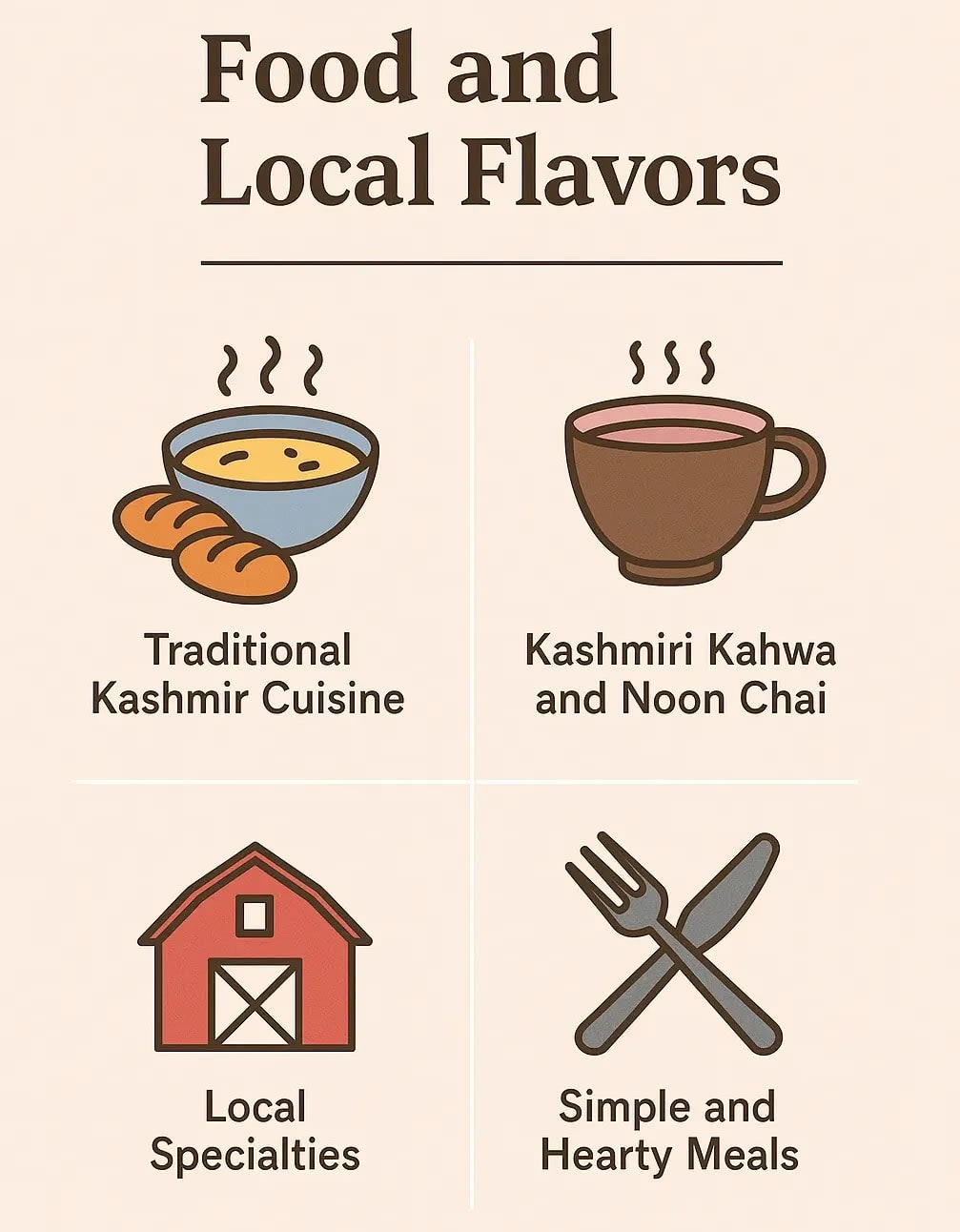
One of the delights of traveling to Doodhpathri is discovering that food here feels as authentic as the landscape. Don’t expect luxury restaurants or multi-page menus you’ll find roadside dhabas, local vendors, and sometimes even a Gujjar family inviting you for tea. That simplicity is the charm.
Traditional Dishes You’ll Encounter
- Rajma-Chawal: Cooked with small, mountain-grown beans that taste richer than the plains variety. A steaming plate after a long meadow walk feels like comfort food made in heaven.
- Makai Roti with Noon Chai: Corn flatbread paired with salty pink tea, served hot by locals. It’s rustic, filling, and perfectly suited for the cool breeze.
- Trout Fresh from the Stream: The Shaliganga River supports trout, and in summer, local stalls grill them over woodfires, seasoned simply with salt and lemon.
- Kashmiri Kahwa: Green tea infused with saffron, cardamom, and crushed almonds, served in small glasses. A must-try to keep you warm while you take in the view.
- Buttermilk and Yogurt: Offered by nomadic families, often fresh from their cattle. Accepting a bowl feels like joining their pastoral rhythm for a while.
What Tourists Should Know
- Availability: Food stalls are seasonal, mostly active in summer when the meadow sees more visitors. In spring or autumn, carry snacks from Srinagar.
- Prices: Very affordable tea for ₹20–₹30, full meals for ₹150–₹300.
- Hygiene: Simple but clean; dishes are cooked fresh in front of you. Bottled water is available, but reusable bottles are better for the environment.
- Cultural Etiquette: If a Gujjar family offers tea or buttermilk, accept graciously it’s a sign of hospitality.
A Culinary Experience, Not Just a Meal
Food at Doodhpathri isn’t about variety, it’s about connection. Sharing noon chai with a herder, eating trout grilled on the riverbank, or sipping kahwa while sitting on grass makes every bite taste more than just food it becomes part of the memory you carry home.
Where to Stay
Unlike Gulmarg or Pahalgam, where luxury resorts and hotels dominate, Doodhpathri still resists large-scale construction. That’s part of its charm this meadow offers nature, not neon lights. But it also means you’ll need to plan your stay carefully.
Day Trips from Srinagar
Most travelers visit Doodhpathri as a day trip. At just 90 minutes away, it’s easy to leave Srinagar in the morning, spend the day exploring the meadow, and return by evening. This is the best option if you prefer comfort staying on a Dal Lake houseboat or in Srinagar hotels while still enjoying the meadow’s wilderness.
- Pros: Comfortable, easy access to Srinagar’s dining and lodging.
- Cons: Limited time in Doodhpathri, you miss the sunrise/sunset magic.
Seasonal Tent Stays
During summer, locals set up tented camps across the meadow. These are basic think floor bedding, kerosene lamps, and hot chai but they immerse you fully in the valley. Imagine waking up to the sound of the Shaliganga stream and cowbells instead of car horns.
- Pros: Raw experience, perfect for adventurers.
- Cons: Very basic amenities, no running water or electricity at times.
- Best For: Backpackers, photographers, nature lovers.
Village Homestays
Villages like Khan Sahib and Raiyar, not far from the meadow, offer homestay options. Families host travelers in their wooden homes, often cooking authentic Kashmiri dishes like haakh (collard greens) or rajma. Evenings are spent around traditional kangris (firepots) for warmth.
- Pros: Cultural immersion, hearty meals, local hospitality.
- Cons: Limited privacy, modest facilities.
- Best For: Cultural travelers, families seeking authenticity.
What You Won’t Find Here
- No luxury hotels, no five-star resorts, no nightlife. Doodhpathri is about disconnecting, not indulging. If you’re looking for spa treatments and swimming pools, Gulmarg or Pahalgam may suit you better.
Insider Tip
If you truly want the full Doodhpathri experience, stay one night in a village homestay or tent. The meadow at sunrise mist rolling off the grass, first light hitting the Pir Panjal peaks is something day-trippers never witness.
Ideal Itinerary Integration
When travelers plan Kashmir, the big names Gulmarg, Pahalgam, Sonamarg, Dal Lake often take center stage. But if you’re building an itinerary that balances the popular with the hidden, Doodhpathri deserves a dedicated spot. Here’s how you can plan your trip:
5-Day Sample Itinerary with Doodhpathri
Day 1 – Arrival in Srinagar
- Check into a houseboat on Dal Lake or a boutique hotel.
- Take a Shikara ride at sunset.
- Stroll through Mughal Gardens (Shalimar, Nishat).
Day 2 – Doodhpathri Day Trip
- Morning: Leave Srinagar by 8:00 am.
- Reach Doodhpathri around 9:30–10:00 am.
- Activities: Pony rides, meadow walks, picnic by Shaliganga, photography.
- Lunch: Streamside dhaba meal (rajma-chawal, kahwa).
- Evening: Return to Srinagar for dinner on Dal Lake.
Day 3 – Gulmarg Adventure
- Drive to Gulmarg (2 hours).
- Gondola ride, ATV rides, and golf course walk.
- Overnight stay in Gulmarg or return to Srinagar.
Day 4 – Pahalgam Excursion
- Visit Aru Valley, Betaab Valley, and Lidder River.
- Ideal for families and couples.
- Stay overnight in Pahalgam or return.
Day 5 – Sonamarg or Yusmarg
- Sonamarg: Snow point (Thajiwas Glacier), Sindh River views.
- Yusmarg: Quieter meadows, suited for those who loved Doodhpathri’s peaceful vibe.
Why Place Doodhpathri Early in the Itinerary?
- It sets the tone with an offbeat experience before you get swept into Kashmir’s busier tourist hubs.
- It helps balance your trip: one quiet day (Doodhpathri) → one adventure day (Gulmarg) → one bustling day (Pahalgam).
- Logistically, it’s close to Srinagar, so you won’t feel rushed.
Traveler Tip
If you’re on a short 3-day trip, skip Sonamarg or Pahalgam but keep Doodhpathri. It gives you the authentic, untouched Kashmir that many tourists miss when they stick only to mainstream stops.
Photography Opportunities
If Kashmir is a painter’s dream, then Doodhpathri is a photographer’s paradise. The meadow isn’t just scenic it’s dynamic, changing with light, seasons, and even the way mist moves across the grass. Here’s how shutterbugs can make the most of their visit:
Golden Hour Magic
- When: Sunrise (6–7 am in summer) and Sunset (6–7:30 pm).
- What to Capture: Long shadows across rolling grass, dew shining like diamonds, Pir Panjal peaks glowing orange.
- Tip: A wide-angle lens works best to capture the endless meadows against the mountains.
Streamside Shots
The Shaliganga stream is the most photogenic feature of Doodhpathri. Where it tumbles over stones, the froth glows white like milk, giving photos a surreal look.
- Best Technique: Use a slow shutter speed (long exposure) to capture silky water movement.
- Angles: Shoot from low ground with wildflowers in the frame for depth.
Nomadic Life Portraits
Gujjar and Bakarwal families camp here in the summer. Their tents, herds, and traditional attire add cultural richness to every photo.
- Best Time: Midday when herders take animals to graze.
- Tip: Always ask permission before portraits offering to share prints later is appreciated.
Winter Minimalism
When snow blankets the meadow, photography shifts from colorful to dramatic. Lone pine silhouettes, frozen river edges, and footprints in snow make striking compositions.
- Gear Tip: Carry extra batteries; cold drains them fast. Use lens hoods to avoid snow glare.
Drone Photography (for those who carry one)
From above, Doodhpathri looks like a green ocean cut by a silver ribbon (the Shaliganga).
- Best Season: Summer for green expanse, autumn for golden hues.
- Caution: Fly responsibly avoid hovering over nomadic tents or livestock.
Bonus Ideas for Instagram-Worthy Shots
- A picnic mat beside the stream with kahwa cups in focus.
- Ponies grazing with the Pir Panjal in the backdrop.
- Wildflowers in foreground, mist rolling in background.
Cultural Layer of Budgam District
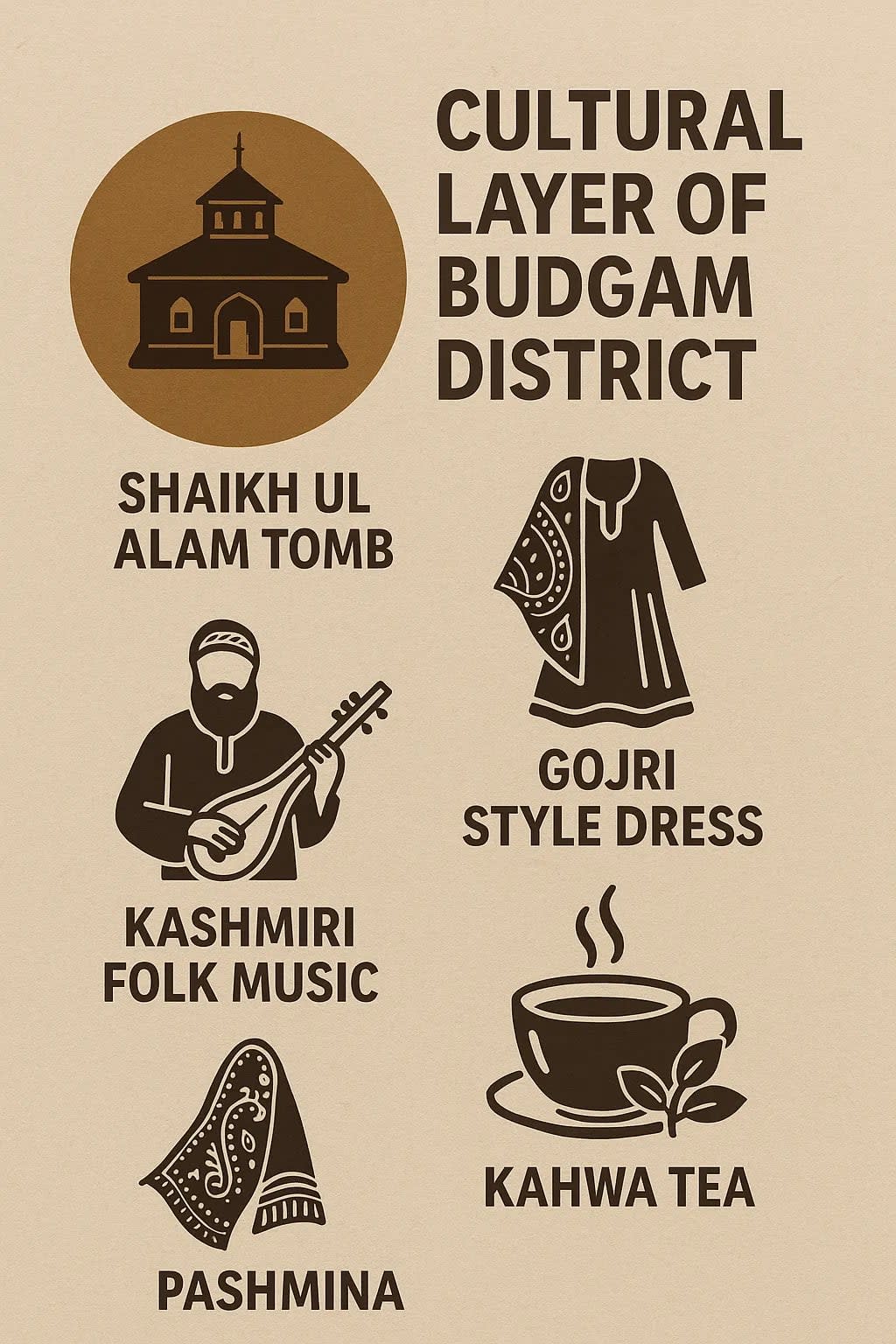
Visiting Doodhpathri isn’t just about landscapes it’s about stepping into the cultural fabric of Budgam district, a region that holds some of Kashmir’s most important spiritual and traditional heritage.
Extending your trip by even a few hours can transform your meadow visit into a deeper cultural experience.
Charar-e-Sharief Shrine
One of Kashmir’s most revered spiritual sites lies not far from Doodhpathri. The Charar-e-Sharief shrine is dedicated to Sheikh Noor-ud-Din Noorani (Nund Rishi), the very saint linked to the legend of Doodhpathri’s origin.
Pilgrims come from across the Valley to pay their respects. For travelers, visiting the shrine adds context the legend of the Valley of Milk connects directly to this saint’s legacy.
Wooden Mosques and Architecture
Budgam’s villages hide medieval wooden mosques built without nails, using deodar beams interlocked in traditional Kashmiri style.
The Jamia Masjid of Budgam, for example, showcases how architecture here blends function with natural materials. Unlike Srinagar’s grand mosques, these are humble yet deeply atmospheric.
Handicrafts and Daily Life
Villages around Doodhpathri like Raiyar and Khan Sahib are known for basket weaving, walnut wood carving, and handwoven rugs. Watching artisans at work or buying directly from families ensures your souvenir carries authenticity while supporting local livelihoods.
Everyday Kashmiri Hospitality
Perhaps the most unforgettable cultural layer is the warmth of locals. A shopkeeper offering you noon chai, a herder inviting you into a tent, or children waving as you pass these small interactions make the memory of Doodhpathri more personal than any photo.
Why Culture Completes the Landscape
Travelers often return from Kashmir with plenty of mountain pictures, but it’s the people, traditions, and stories that stay in memory.
Doodhpathri offers both a meadow untouched by commercialization and a cultural backdrop rooted in faith, craft, and hospitality.
Practical Travel Tips
Planning a visit to Doodhpathri is simple, but a little preparation makes the experience smoother and more enjoyable. Here’s a complete checklist:
Getting There
- Distance: Around 42 km from Srinagar (90 minutes by car).
- Transport Options:
- Hired a cab from Srinagar: ₹2,500–₹3,500 round trip.
- Self-drive: Roads are well-paved but narrow in stretches be cautious on bends.
- Public transport: Not reliable best avoided unless you’re very familiar with the region.
- Hired a cab from Srinagar: ₹2,500–₹3,500 round trip.
Best Time to Visit
- May–September: Meadows are green, streams full, weather pleasant.
- October: Quieter, golden landscapes great for solitude seekers.
- December–February: Snowy wonderland, but accessibility depends on road conditions. Always check before traveling.
What to Pack
- Spring/Summer: Light jackets, sturdy walking shoes, sunscreen, sunglasses, water bottle.
- Autumn: Warm layers, shawls, thermals for evenings.
- Winter: Heavy jackets, snow boots, gloves, thermals, power banks (batteries drain fast in cold).
Connectivity
- Mobile signals are patchy. BSNL works best, but don’t expect strong 4G. Consider this your digital detox day.
Food & Essentials
- No big restaurants. Carry snacks, fruits, or order simple meals from seasonal dhabas.
- Always carry cash ATMs aren’t available nearby.
Safety & Etiquette
- Solo Travel: Safe, but stick to daylight hours for return journeys.
- Photography: Always ask locals before clicking portraits.
- Environment: Carry back your waste don’t leave plastic in the meadow.
- Wildlife: Don’t feed animals or disturb herds it disrupts the local ecology.
Suggested Duration
- Day Trip: 6–8 hours, including travel time.
- Overnight Stay: If camping or staying in nearby villages, plan at least 1.5 days for the full sunrise/sunset experience.
Why Doodhpathri Belongs on Your Kashmir Itinerary
Travelers often land in Kashmir with a checklist Dal Lake, Gulmarg, Pahalgam, Sonamarg. These places are beautiful, no doubt, but they also attract the largest crowds.
If you want Kashmir beyond the postcards, you need to step into a meadow that still whispers rather than shouts. That meadow is Doodhpathri.
Here’s why it deserves a guaranteed spot in your trip:
- Authenticity Over Commercialization
Where Gulmarg has gondolas and Sonamarg has highways lined with shops, Doodhpathri offers silence broken only by rivers and cowbells. You experience Kashmir without filters. - Culture Woven Into the Landscape
Meeting Gujjar herders, sipping noon chai in a canvas tent, or watching flocks cross the stream gives you a glimpse of life that hasn’t changed for centuries. It’s a culture you can feel, not just read about. - Perfect Balance of Accessibility and Wilderness
At just 90 minutes from Srinagar, Doodhpathri feels far but isn’t difficult to reach. You get wild landscapes without exhausting treks a rare combination for families, couples, and casual travelers. - Seasonal Transformations
Unlike other tourist hubs that feel the same year-round, Doodhpathri reinvents itself every season green pastures in summer, golden meadows in autumn, snow deserts in winter. Each visit feels like a discovery. - The Memory That Stays
Ask travelers what they remember most about Kashmir. Many will say shikaras on Dal Lake or gondolas in Gulmarg. But those who visited Doodhpathri recall something quieter yet deeper: a meadow where they felt truly alone with the mountains.
Skipping Doodhpathri is like reading Kashmir’s story but leaving out its most poetic chapter. It may not be crowded, advertised, or luxurious but it is unforgettable.
Final Thoughts
Every traveler comes to Kashmir searching for something different. Some want adventure, some crave luxury, some chase photographs but everyone longs for a moment of stillness, a memory that feels personal. That’s what Doodhpathri gives you.
Here, you won’t find towering resorts or neon-lit markets. Instead, you’ll find meadows that stretch without end, streams that churn like liquid silver, and nomadic families who still live in rhythm with the mountains.
The absence of crowds is the gift you’re free to breathe, listen, and connect with Kashmir in its purest form.
When you walk through Doodhpathri, you’re not just visiting another meadow. You’re stepping into a legend born centuries ago, watching it come alive in the frothy waters of the Shaliganga.
You’re sharing chai with herders who live stories most of us have forgotten. You’re experiencing a Kashmir that feels untouched, unhurried, and unforgettable.
If you’re planning a trip to Kashmir and want more than the usual tourist trail, make sure Doodhpathri is on your itinerary. Its meadows, streams, and pastoral life create memories no guidebook can capture.
Doodhpathri is ideal for travellers who want open meadows, fresh air, and quiet landscapes away from crowds. Including it in the right Kashmir tour packages lets you experience this hidden gem comfortably while exploring the valley at a relaxed pace.
Check out our recent blog on Places to Visit in Kashmir: A Complete Travel Guide
Frequently Asked Questions
Doodhpathri earned its name from folklore where a saint struck the ground and milk gushed out. The streams still appear frothy and milky as they hit rocks.
Doodhpathri lies about 42 km from Srinagar. It takes around 90 minutes by road through Budgam’s scenic villages and pine corridors.
Summer (June–August) is ideal for green meadows and herders’ camps, while winter offers snow-covered landscapes for adventurous travelers.
Unlike Gulmarg or Pahalgam, Doodhpathri has no big hotels. Visitors usually opt for day trips, tents, or homestays in nearby villages.
Doodhpathri is quieter, less commercial, and more pastoral. It offers authentic nomadic encounters, serene meadows, and raw alpine beauty without crowds.