
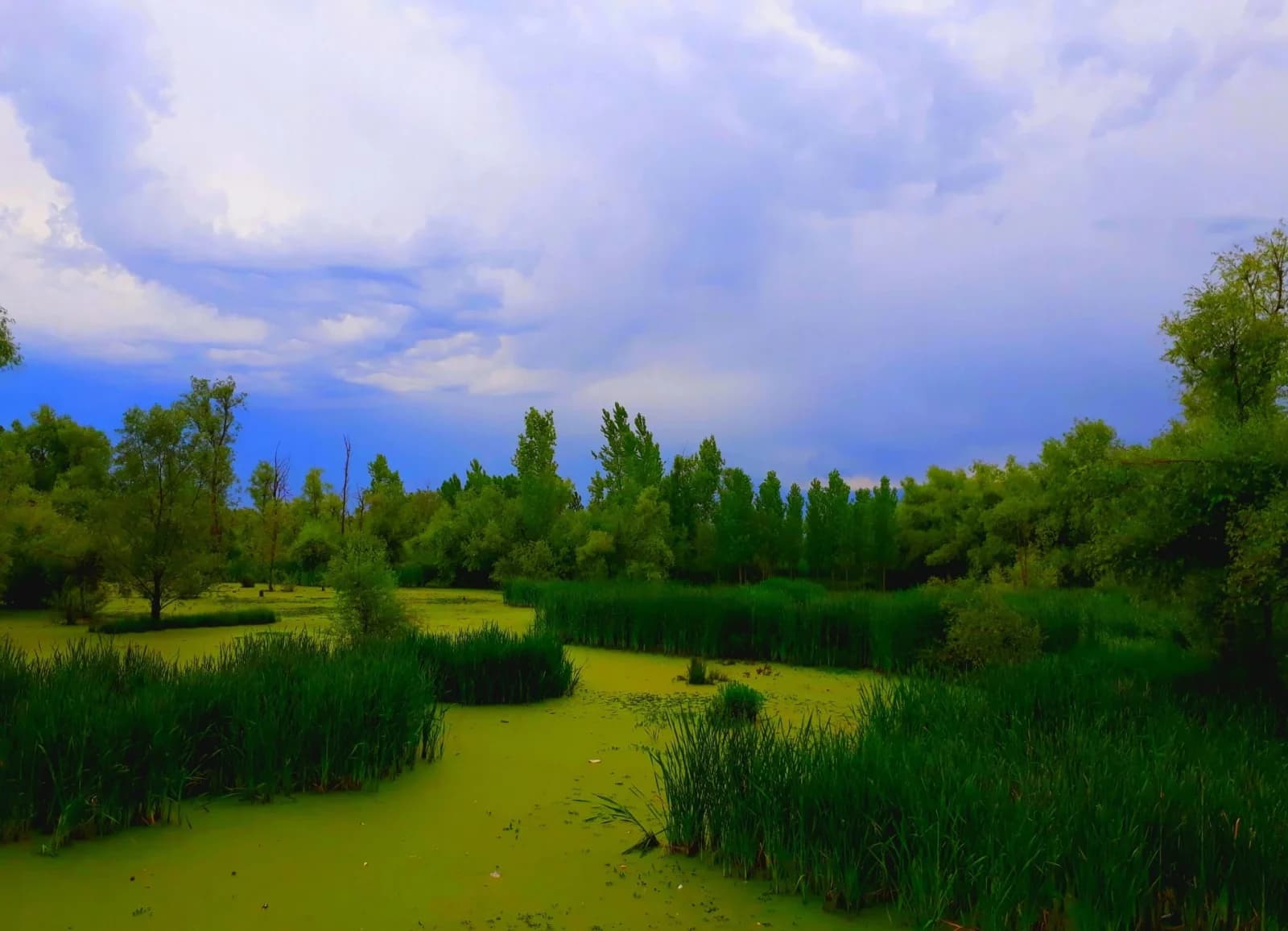
What Makes Hokersar Wetland the Queen Wetland of Kashmir?
Table of Contents
Bird Species at Hokersar Wetland: What You Will Actually See
Best Time to Visit Hokersar Wetland: Season-by-Season Breakdown
Every winter, over 68 species of migratory birds fly thousands of kilometers to land at a single wetland just 14 km from Srinagar, Hokersar Wetland, one of the most ecologically significant protected areas in the entire Indian subcontinent, covering roughly 13.75 sq km of shallow freshwater marsh and open water. Despite sitting at the edge of one of India's most visited tourist cities, Hokersar remains genuinely overlooked by the majority of Kashmir visitors, who pass within sight of its reed beds on the highway without stopping. This guide changes that: by the time you finish reading, you will know exactly where Hokersar is, what lives there, when to go, how to get in, and how to make the most of every minute at the water's edge.
What Is Hokersar Wetland and Where Is It Located
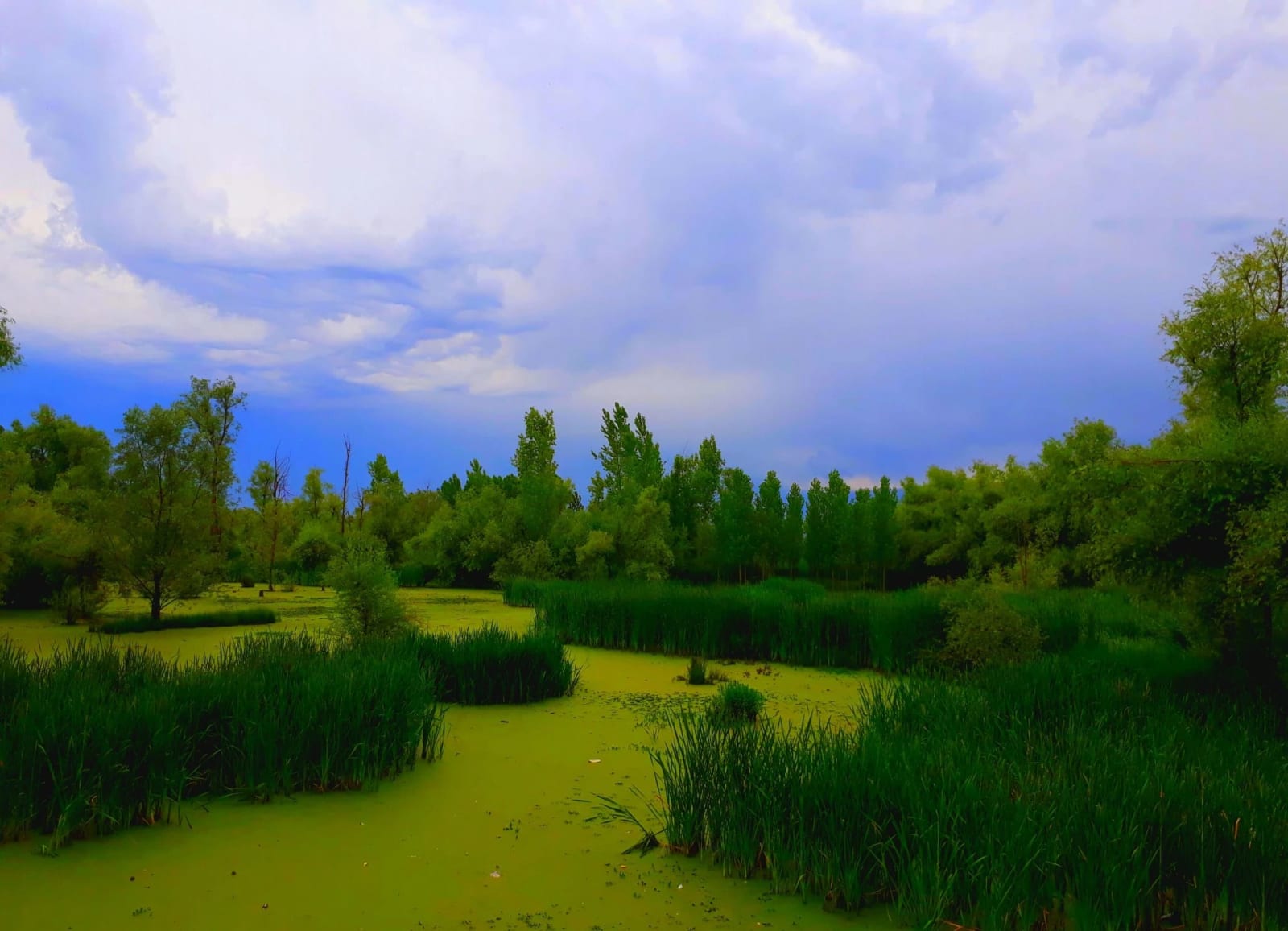
Image Source: Wikipedia
Hokersar Wetland is a protected Ramsar site located in Budgam district, Jammu and Kashmir, approximately 14 km northwest of Srinagar city center. The wetland sits at an altitude of around 1,580 meters above sea level. It forms part of the Kashmir Valley's broader network of lakes and marshes that together make this high-altitude basin one of the most productive freshwater environments in South Asia.
Officially designated as a Wildlife Sanctuary in 1986, Hokersar covers 13.75 sq km of shallow freshwater marsh, dense reed beds, and open water channels. What gives it outsized ecological importance relative to its modest size is its position on the Central Asian Flyway, one of the world's major bird migration corridors connecting breeding grounds in Siberia and Central Asia with wintering areas across the Indian subcontinent. Hokersar functions as a natural funnel point on this flyway, concentrating birds arriving over the Pir Panjal and Karakoram ranges into a single, food-rich stop-over site.
The wetland is fed primarily by the Doodhganga stream and several seasonal channels draining from the surrounding hills. This consistent inflow keeps water levels relatively stable through the winter months, which is precisely why the site is so reliable for migrating waterfowl that need predictable feeding conditions after long overwater and over-mountain flights.
Historical and Conservation Background of Hokersar
Hokersar was listed as a Ramsar Wetland of International Importance in 1990, making it one of only a handful of sites in Jammu and Kashmir to carry that designation. The Ramsar Convention, signed in Iran in 1971, identifies wetlands that meet specific international criteria for ecological importance. Hokersar's inclusion placed it in the company of globally recognized sites that governments are obligated to protect and manage sustainably.
The conservation story before that listing was far less encouraging. Local records and wildlife surveys indicate that bird populations at Hokersar dropped sharply during the 1970s, driven by a combination of agricultural encroachment on wetland margins, unregulated hunting during migration season, and changes to water inflow patterns caused by upstream land use. By the time formal sanctuary status was granted in 1986, the site had already lost a significant portion of its original area and wildlife productivity.
The Jammu and Kashmir Wildlife Protection Department now manages the sanctuary with seasonal activity restrictions during peak migration months, roughly October through March, when disturbance to roosting and feeding flocks is most damaging. Since the 2000s, multiple restoration projects have addressed the site's most pressing habitat problems, including reed-cutting programs to prevent Phragmites beds from completely closing off open water areas and water-level management through control of drainage channels. Community-based conservation programs that bring local fishermen into the monitoring and protection process have shown measurable improvement in water bird counts over the past decade, making Hokersar a reasonably successful example of co-managed wetland conservation in a challenging social and political context.
Why Hokersar Was Designated a Ramsar Site
Ramsar designation is not awarded loosely. A wetland must satisfy at least one of nine specific criteria set by the Convention's scientific committee. Hokersar qualifies on multiple counts simultaneously, which reflects just how productive this relatively small site actually is.
The most straightforward qualifying criterion is numerical: Hokersar regularly supports more than 20,000 waterbirds, which alone triggers Ramsar eligibility under Criterion 5. The site also provides critical wintering habitat for globally threatened species including the common pochard and ferruginous duck, both of which have seen range-wide population declines that make each viable wintering site increasingly important for their long-term survival.
The physical structure of the wetland explains much of its productivity. Shallow water depth, averaging just 1 to 2 meters across most of the site, creates ideal feeding conditions for multiple bird feeding strategies operating simultaneously. Dabbling ducks tip forward to reach submerged vegetation in the shallows, diving ducks work the slightly deeper central channels, and waders probe the muddy margins, all within the same small area, which is why species diversity here is so high relative to the wetland's size.
The dense Phragmites reed beds along the wetland's margins add a further dimension by providing nesting and roosting cover for resident species, while the open water areas support the large migratory flocks. Beyond birdwatching value, the wetland delivers measurable hydrological services to the surrounding area, including flood buffering for downstream Srinagar during heavy rain or snowmelt events, and water filtration through natural biological processes, functions that benefit the city regardless of whether anyone visits the sanctuary.
Bird Species at Hokersar Wetland: What You Will Actually See
Hokersar records over 68 species of migratory waterfowl alone, with total bird species counts across resident and visiting populations exceeding 150. That figure places it among the most species-rich wetlands in the western Himalayan region. During peak winter months, November through February, single-day counts of over 100,000 individual birds have been recorded during heavy migration years, a spectacle that is genuinely difficult to describe to anyone who has not witnessed a large marsh covered wall to wall with ducks at first light.
The mix of open water, reed margins, and adjacent agricultural fields that surround the sanctuary supports an unusually wide range of feeding strategies. Diving ducks work the central channels, dabbling species crowd the shallower margins, marsh harriers quarter constantly overhead, and kingfishers perch along every drainage ditch. Visitors carrying even basic binoculars can reliably identify multiple species within 30 minutes of reaching the main viewing embankment, without any specialist knowledge, simply because the bird density in winter is that high.
Top Migratory Species to Watch for at Hokersar
The northern pintail is perhaps Hokersar's signature winter species. It arrives in October in large flocks that can number in the thousands, and its long tail and elegant flight silhouette make it immediately identifiable even at distance against the backdrop of the Zabarwan hills. Gadwall, common teal, Eurasian wigeon, and northern shoveler are consistently present from November through February and collectively account for the bulk of waterbird biomass on the site during peak season.
Greater flamingo makes occasional but spectacular appearances, with sightings documented during unusually warm winters when birds overshoot their typical Gujarat wintering grounds and continue north into Kashmir. These sightings are not predictable, but when they occur they are unmissable; a flock of flamingos against the reed beds with snow-dusted peaks behind them is not an image most photographers forget quickly.
Marsh harrier and hen harrier regularly quarter the reed beds in search of prey, and early morning visits between 7 and 9 AM give the best opportunities to watch hunting flights at close range before bird activity settles into midday loafing patterns. Both common kingfisher and pied kingfisher perch reliably along the drainage channels at the wetland's edges and are among the easiest species to photograph even without a long telephoto lens.
Bar-headed goose deserves a specific mention for the extraordinary ecological context it brings to a Hokersar sighting. This species crosses the main Himalayan range at altitudes exceeding 7,000 meters during migration, with physiological adaptations to low-oxygen flight that make it one of the most remarkable migrants on earth. Watching bar-headed geese feed quietly in a Kashmir wetland after a Himalayan crossing puts the scale of the Central Asian Flyway into vivid human perspective.
Resident and Year-Round Birds at Hokersar
A common and somewhat frustrating misconception about Hokersar is that it is only worth visiting in winter. The resident bird community is genuinely rewarding across all seasons, and summer visits come with the significant bonus of having the viewing embankment almost entirely to yourself.
Purple swamphen, moorhen, and little grebe are present throughout the year and are often easier to observe in summer when the absence of large migratory flocks allows them to move openly rather than being pushed to the margins. Black-crowned night heron and grey heron roost in the willow trees along the wetland margin regardless of season and are reliably active at dawn and dusk. Indian spot-billed duck is the dominant resident duck species and can be found in pairs or small groups year-round.
During summer, the Phragmites reed beds fill with breeding warblers and reed buntings, offering a completely different birdwatching experience from the winter spectacle, quieter, more intimate, requiring more patience and skill to locate individual calling birds in dense vegetation. It is the kind of birdwatching that suits visitors who want to slow down and listen rather than scan vast flocks.
Best Time to Visit Hokersar Wetland: Season-by-Season Breakdown
The single most important factor in a rewarding Hokersar visit is timing. The difference between arriving in November and arriving in June is, quite literally, the difference between witnessing one of Asia's great wildlife spectacles and walking along a quiet marsh with a handful of resident ducks for company. Both experiences have genuine value, but they are radically different, and visitors should choose knowingly.
October through March is the core migratory season. November and December typically offer the highest bird counts and the greatest species diversity, as the main pulse of birds arriving from Siberia and Central Asia overlaps with early-winter species still on passage. January and February bring the coldest conditions but also the most stable concentrations, with birds that have settled into winter routine and are less skittish than newly arrived migrants. April through June is a transition period: migratory species have departed, but summer residents are active, flowering wetland vegetation is at its peak, and visitor numbers drop to almost nothing, making it a genuinely peaceful alternative for those who prioritize solitude over spectacle. July through September, the monsoon period, brings rising water levels, reduced bird visibility, and potentially difficult road access. It is generally not the right choice for a first-time Hokersar visitor.
Season Comparison Table: Visiting Hokersar Wetland
Season | Months | Bird Count | Species Diversity | Weather | Crowd Level | Road Access | Photography |
|---|---|---|---|---|---|---|---|
Peak Winter | November to February | Very High (50,000 to 100,000+) | Highest (68+ migratory species) | Cold, 0 to 8°C | Low to Moderate | Good | Excellent, low-angle winter light |
Early Autumn | October | High (first migratory waves arriving) | High | Mild, 10 to 18°C | Low | Good | Good, golden light and partial foliage color |
Spring Transition | March to April | Declining (departure flights) | Moderate | Mild to warm | Very Low | Excellent | Good for departure behavior shots |
Summer | May to June | Low (residents only) | Low to Moderate | Warm, 20 to 28°C | Very Low | Excellent | Green vegetation, good for macro and botanical work |
Monsoon | July to September | Low | Low | Wet and humid | Very Low | Potentially limited | Challenging, mist and mud but atmospheric |
How to Reach Hokersar Wetland from Srinagar
Hokersar's greatest practical advantage is its proximity to Srinagar. At approximately 14 km from the city center, the wetland is reachable in under 30 minutes by road in normal traffic conditions, making it a realistic half-day excursion from any hotel or houseboat in the Srinagar area. There is no need for an overnight stay, no long mountain drive, and no complicated permit process, which removes every logistical excuse for skipping it.
The route from Srinagar follows the Srinagar-Baramulla National Highway (NH1) northwest from the city before turning off at Krabal village and following signs toward the sanctuary entrance. The road is surfaced and generally in reasonable condition year-round, including through the winter months when migratory bird activity is at its peak.
Auto-rickshaws from Srinagar's Lal Chowk area can reach the wetland for approximately INR 150 to 200 one way. If you plan a half-day visit, negotiate a waiting fare with the driver before departure rather than trying to find a return vehicle at the sanctuary gate. Private taxis from Srinagar hotels charge around INR 600 to 900 for a return half-day trip including waiting time, which works out well for families or small groups carrying optical equipment. Kashmir Holidays can also arrange dedicated birdwatching day trips that pair Hokersar with nearby Hygam Wetland for a complete full-day wetland experience.
Visitors arriving by air should note that Sheikh ul-Alam International Airport Srinagar sits approximately 18 km from Hokersar, making a direct transfer from the airport to the sanctuary on arrival day entirely feasible if you plan your afternoon around the journey.
Entry Rules, Permits, and Practical Visitor Information
Entry to Hokersar Wildlife Sanctuary requires a nominal permit purchased at the sanctuary gate. Fees as of 2024 are approximately INR 20 to 50 for Indian nationals and INR 100 to 200 for foreign nationals. The sanctuary opens at sunrise and closes at sunset, with no provision for overnight stays within the boundary. These fees are modest but meaningful: they fund the sanctuary's day-to-day maintenance budget and contribute to anti-poaching patrol costs.
Personal photography with handheld cameras and telephoto lenses is permitted on your standard entry ticket. Commercial photography assignments and drone flights, however, require advance permission from the Jammu and Kashmir Wildlife Protection Department. Processing times for these permits can run 7 to 10 working days, so anyone planning commercial or aerial photography should begin the application process well before travel dates.
During the peak migration season from November through January, the sanctuary may apply limits on visitor numbers within the core viewing areas to reduce disturbance to roosting flocks. This is worth checking in advance if you are planning a visit on a weekend or public holiday when casual day-trippers from Srinagar can push visitor numbers above comfortable levels.
A licensed local guide is not mandatory but is strongly worth hiring. Guides who work Hokersar regularly know exactly where specific species are concentrating on any given day, which sections of the embankment give the best sightlines for particular duck species, and when to expect harrier hunting flights. Visitor feedback consistently suggests that guided visits produce 40 to 50 percent more species sightings than self-guided visits of equivalent duration.
What to Bring and How to Behave at Hokersar
Winter visits demand serious layering. Temperatures at the wetland edge before 9 AM in January can drop to -3°C, and the open water amplifies wind chill considerably. Thermal base layers, a mid-layer fleece, and a windproof outer shell are the minimum sensible kit. Waterproof boots are non-negotiable: the path from the car park to the main viewing embankment crosses drainage channels and the ground stays reliably muddy from October through March.
Binoculars in the 8x42 class are essential, not optional. The open water portions of the wetland mean birds are routinely 100 to 300 meters from the embankment, and the naked eye simply cannot resolve species-level detail at that distance. A field guide to Indian birds, the Grimmett and Inskipp volume, is the standard reference and adds significant value for visitors who want to identify what they are seeing rather than simply marvel at the numbers. For photography, a 300mm lens is the practical minimum for images that show useful detail; longer is better.
Noise discipline matters more at Hokersar than at almost any other Kashmir wildlife site. Large concentrations of ducks are instinctively alert to disturbance, and a single sharp noise or sudden movement on the embankment can flush an entire section of the marsh to the far end of the open water, taking thousands of birds with it. Speak quietly, move slowly, and stay on the marked paths.
Finally, arrive early. By 10 AM most feeding activity has peaked, and birds begin moving to midday loafing areas that are largely out of sight from the public embankment. Sunrise arrivals consistently outperform late-morning visits by every measure of species count and behavioral activity, and the low winter light at that hour makes for far better photographs than the flat midday conditions that later arrivals encounter.
Best Time to Visit Hokersar Wetland: Season-by-Season Breakdown
The single most important factor for a rewarding Hokersar visit is timing. The difference between arriving in November and arriving in June is the difference between witnessing 100,000 birds rising off a mist-covered marsh and walking a quiet, largely empty reed bed. Both have value, but only one will stop your breath entirely.
October through March is the core migratory season, with November and December typically offering the highest bird counts and the greatest species variety in any given year. April to June is a genuine transition period; migratory birds have departed, summer resident species are active, flowering wetland vegetation is at its photographic peak, and visitor numbers drop to almost nothing. July through September brings the monsoon, rising water levels, reduced bird visibility, and potentially muddy access tracks, generally not the best choice for a first visit, though the atmospheric mist and lush green margins have their own appeal for photographers who know what they are doing.
Season Comparison Table: Visiting Hokersar Wetland
Season | Months | Bird Count | Species Diversity | Weather | Crowd Level | Road Access | Photography Conditions |
|---|---|---|---|---|---|---|---|
Peak Winter | November-February | Very High (50,000-100,000+) | Highest (68+ migratory species) | Cold (0 to 8°C) | Low-Moderate | Good | Excellent low-angle winter light ideal for bird photography |
Early Autumn | October | High (first migratory waves arriving) | High | Mild (10-18°C) | Low | Good | Good, golden light and partial foliage colour |
Spring Transition | March-April | Declining (departure flights visible) | Moderate | Mild to warm | Very Low | Excellent | Good for capturing departure behaviour and flock formations |
Summer | May-June | Low (residents only) | Low-Moderate | Warm (20-28°C) | Very Low | Excellent | Green vegetation, good for macro and botanical photography |
Monsoon | July-September | Low | Low | Wet and humid | Very Low | Potentially limited | Challenging, mist and mud but atmospheric for moody shots |
How to Reach Hokersar Wetland from Srinagar
Hokersar sits approximately 14 km from Srinagar city centre and takes under 30 minutes to reach by road in normal traffic conditions. This makes it a perfectly realistic half-day excursion from any hotel or houseboat base in Srinagar, including the Dal Lake area. The route runs via the Srinagar-Baramulla National Highway (NH1); drivers should turn off at Krabal village and follow signs toward the sanctuary entrance. The road surface is generally good year-round, though the final approach track to the car park can become soft after heavy rain.
Several transport options are available depending on your budget and group size:
Auto-rickshaw: From Lal Chowk in central Srinagar, auto-rickshaws can reach the wetland for approximately INR 150-200 one way. Negotiate a waiting fare upfront if you are planning a half-day visit; most drivers are familiar with the route.
Private taxi: Srinagar hotels can arrange private taxis for around INR 600-900 return, including waiting time. This is the most practical option for families or visitors carrying camera equipment.
Organised day trip: Kashmir Holidays can arrange dedicated birdwatching day trips from Srinagar that combine Hokersar with the nearby Hygam wetland for a full-day wildlife experience without the logistics of arranging your own transport.
From the airport: Sheikh ul-Alam International Airport is approximately 18 km from Hokersar. A direct transfer from the airport to the wetland on arrival day is entirely possible and popular among visiting birdwatchers who want to make use of the first afternoon light.
Entry Rules, Permits, and Practical Visitor Information
Entry requires a nominal permit payable at the sanctuary gate; fees for 2024 are approximately INR 20-50 for Indian nationals and INR 100-200 for foreign nationals. A small additional charge may apply for vehicles using the car park.
The sanctuary opens at sunrise and closes at sunset. There is no provision for overnight stays within the sanctuary boundary.
Personal photography with handheld cameras and telephoto lenses is permitted with the standard entry ticket. Commercial photography and drone flights require advance written permission from the Jammu and Kashmir Wildlife Protection Department, which typically takes 7-10 working days to process, plan;cordingly if you need it.
During peak migration season from November to January, the sanctuary may impose limits on visitor numbers in core viewing areas to reduce disturbance to roosting flocks. Arriving early in the morning virtually eliminates the chance of being turned away.
A licensed local guide is not mandatory but is strongly recommended. Guides who know Hokersar can identify exactly where specific species are concentrated on any given day and routinely improve visitor sighting rates by 40-50% based on post-visit feedback.
Binoculars with a minimum specification of 8x42 are essential. Open water areas mean birds are frequently 100-300 metres from the main viewing embankment; naked-eye observation of species detail is simply not practical.
What to Bring and How to Behave at Hokersar
Getting the most from a Hokersar visit comes down to preparation as much as timing. The wetland environment is exposed and physically demanding in winter, and the birds here are sensitive to noise and sudden movement in ways that most urban wildlife is not. A few straightforward steps make the difference between a frustrating morning and a genuinely memorable one.
Clothing: Layer up heavily for winter visits. Temperatures at the wetland edge before 9 AM drop to -3°C in January, and open water amplifies wind chill significantly. A windproof outer layer, thermal base layers, and a hat and gloves are not optional.
Footwear: Waterproof boots are essential. The path from the car park to the main viewing embankment crosses drainage channels and the ground is reliably muddy from October through March. Trainers or flat shoes will leave you cold and wet within minutes.
Equipment checklist: binoculars (8x42 minimum), a field guide to Indian birds (Grimmett and Inskipp is the standard reference used by guides in the region), a notebook for species records, a telephoto lens of at least 300mm if you are photographing birds, and a thermos of tea or coffee for the early morning cold.
Noise discipline: This is the single most important behavioural rule at Hokersar. Large flocks of ducks are highly skittish and will flush to the far end of the wetland if visitors talk loudly, run, or make sudden movements on the embankment. Keep voices low, move slowly, and treat the viewing area as you would a library; your fellow visitors and the birds will both thank you.
Timing: Arrive at or before sunrise. By 10 AM, peak feeding activity has ended, and most species move to loafing areas that are well out of easy sighting distance from the embankment. The best light for photography is also in the first two hours after sunrise.
Feeding prohibition: Do not feed birds under any circumstances. It is illegal within the sanctuary and genuinely harmful; it conditions birds to approach humans and disrupts natural foraging patterns in ways that have measurable knock-on effects for the whole flock.
Hokersar Wetland and the Broader Kashmir Wildlife Circuit
Hokersar is most rewarding when visited as part of a wider Kashmir wetland and wildlife itinerary. Treating it as a standalone day trip works perfectly well, but visitors who build it into a multi-site wildlife sequence consistently report a richer and more contextually satisfying experience. The Kashmir Valley contains a connected network of protected wetlands, each with its own character and species mix, and Hokersar sits at the heart of that network.
Combining Hokersar with a Nagin Lake boat trip and a visit to Dachigam National Park for Kashmir stag and leopard creates a focused three-day wildlife experience that showcases the full ecological range of the Valley. Kashmir Holidays structures wildlife packages around this sequence, timing early morning wetland visits to coincide with peak bird activity before transitioning to afternoon forest walks at Dachigam when light conditions for mammal spotting are more favourable.
Sites worth combining with a Hokersar visit:
Hygam Wetland, 5 km north, particularly good for cranes and geese; often visited as a paired morning excursion with Hokersar
Shallabugh Conservation Reserve, 40 km east, the largest wetland in the Kashmir Valley with exceptional goose concentrations in peak winter
Nagin Lake, 15 km from Hokersar, offering boat-based waterbird observation in a strikingly scenic setting distinct from the marsh environment
Dachigam National Park, 22 km, the primary habitat for the critically endangered Kashmir stag (hangul), brown bear, and leopard
Wular Lake, 60 km, one of Asia's largest freshwater lakes with spectacular goose concentrations during peak migration.
Threats Facing Hokersar Wetland and Why Responsible Tourism Matters
Hokersar carries Ramsar status and Wildlife Sanctuary designation, but protection on paper does not automatically mean protection on the ground. Several genuine threats continue to pressure the wetland, and visitors who understand them are better placed to act as responsible guests rather than additional burdens on a stressed ecosystem.
Agricultural encroachment: Hokersar has lost an estimated 30% of its original area to paddy field conversion since the 1960s. Pressure on the southern and eastern margins continues, shrinking the core habitat available to migratory flocks.
Water pollution: Agricultural runoff carrying pesticides and fertilizers from surrounding farmland has been documented in water quality surveys, with measurable impacts on the aquatic invertebrate communities that waterfowl depend on for food.
Poaching: Despite sanctuary status, illegal hunting of waterfowl during migration season remains a documented problem. Visitor presence during peak season acts as a genuine deterrent and is one of the less obvious positive contributions responsible tourism makes to conservation here.
Climate variability: Shifting precipitation patterns in Central Asia affect migration timing and route selection. Bird counts at Hokersar show year-to-year variability of up to 40% correlated with Siberian weather and early snowfall conditions, a reminder that this ecosystem is connected to processes far beyond the Kashmir Valley.
What visitors can do: Stick strictly to marked paths and embankments. Carry all waste out of the sanctuary. Report any signs of illegal hunting or net-setting to sanctuary staff at the gate. Entry fee revenue from organised visits through operators like Kashmir Holidays directly funds sanctuary maintenance and anti-poaching patrols, making responsible tourism a concrete conservation contribution rather than just a slogan.
Conclusion
Hokersar Wetland is one of those rare places where natural spectacle, ecological significance, and sheer accessibility combine in a way that makes it genuinely unmissable for any Kashmir visitor with even a passing interest in wildlife. It is 14 km from Srinagar, costs almost nothing to enter, and on a good winter morning it can deliver an experience that most visitors describe as one of the single most memorable moments of their entire Kashmir trip. Fifty thousand birds lifting off a mist-covered marsh at first light, against a backdrop of snow-capped peaks and the calls of geese carrying across the water, is not something that fades from memory quickly. The key takeaways are simple: visit between November and February for peak bird counts, arrive at or before sunrise, bring binoculars and warm layered clothing, hire a local guide, and treat the site with the care that a protected Ramsar wetland genuinely deserves.
Beyond the birdwatching itself, a visit to Hokersar connects you to something larger: a migration corridor stretching from Siberia to the Indian subcontinent, and a conservation story that is still being written by the local communities, wildlife managers, and visitors who choose to engage with it thoughtfully. Kashmir Holidays at kashmirholidays.co can build a Hokersar visit into any Srinagar-based itinerary, whether as a standalone sunrise excursion or as part of a wider Kashmir wildlife and nature tour timed to the peak migration season. Browse the wildlife packages on the site or contact the team directly to customise a birdwatching itinerary around Hokersar's very best months; our winter morning at the marsh is waiting.
Frequently Asked Questions
Is Hokersar Wetland open to tourists throughout the year, or only during migration season?
The sanctuary is open year-round during daylight hours, from sunrise to sunset on every day of the year. The experience is dramatically better between November and February when migratory birds are present in large numbers, but summer visits are genuinely rewarding in their own right. Resident species including purple swamphen, moorhen, grey heron, and Indian spot-billed duck are active year-round, flowering reed bed vegetation is at its best in May and June, and visitor numbers are extremely low outside the winter season, giving you the place largely to yourself.
How many bird species can I expect to see at Hokersar on a single visit?
A winter morning visit with binoculars and reasonable patience typically yields 20-35 species for an attentive observer. Hiring a local guide who knows exactly where specific species are concentrating on a given day can push that count significantly higher. During the peak November arrival period, when migratory flocks are at their largest and most varied, single-day species totals of 50 or more have been recorded by experienced birders. Summer visits produce lower counts, typically 10-20 species, but with better views of resident birds that are partially obscured by departing flocks in winter.
Is Hokersar Wetland safe to visit, and are there any travel restrictions for tourists?
Yes, Hokersar is safe to visit and sits well within the normal tourist zone surrounding Srinagar. No special inner line permit or restricted area permit is required to visit the sanctuary. Standard Jammu and Kashmir travel advisories apply as they do for any visit to the region, and it is always worth checking current conditions through official sources or your tour operator before travel. The sanctuary itself is a managed, staffed protected area with a gate, a car park, and regular visitor foot traffic, particularly during the winter migration season.
Can I photograph birds at Hokersar, and do I need a special permit for a camera?;
Personal photography using handheld cameras, telephoto lenses, and standard photographic equipment is fully permitted with your standard entry ticket , no separate camera permit is required. Commercial photography assignments and drone flights are a different matter entirely and require advance written permission from the Jammu and Kashmir Wildlife Protection Department, which typically takes 7-10 working days to process. If you are planning a commercial shoot or aerial photography, apply well before your intended visit date. For personal wildlife photography, a telephoto lens of at least 300mm is strongly recommended given the distances involved at the main viewing embankment.
What is the entry fee for Hokersar Wildlife Sanctuary?
Entry fees are nominal and payable at the sanctuary gate on arrival. As of 2024, the fee is approximately INR 20-50 for Indian nationals and INR 100-200 for foreign nationals. A small additional charge may apply for vehicles using the car park area immediately adjacent to the sanctuary entrance. Fees are subject to revision by the Jammu and Kashmir Wildlife Protection Department, so it is worth confirming the current rate with your guide or tour operator before visiting. The fees collected directly fund sanctuary maintenance, anti-poaching patrols, and habitat management work within the protected area.