
Table of Contents
Every spring, tucked inside the old city of Srinagar, a centuries-old garden quietly transforms into one of the most breathtaking natural displays in all of Kashmir. Badamwari Garden comes alive with thousands of almond trees bursting into delicate pink and white blossoms, and for a few precious weeks each year, it draws photographers, poets, families, and curious travellers from across India and beyond. If you are planning a Kashmir trip in early spring and have not put Badamwari on your list yet, this guide will give you every reason to move it straight to the top.
Check out our latest blog on Kashmir Stag: The Critically Endangered Hangul
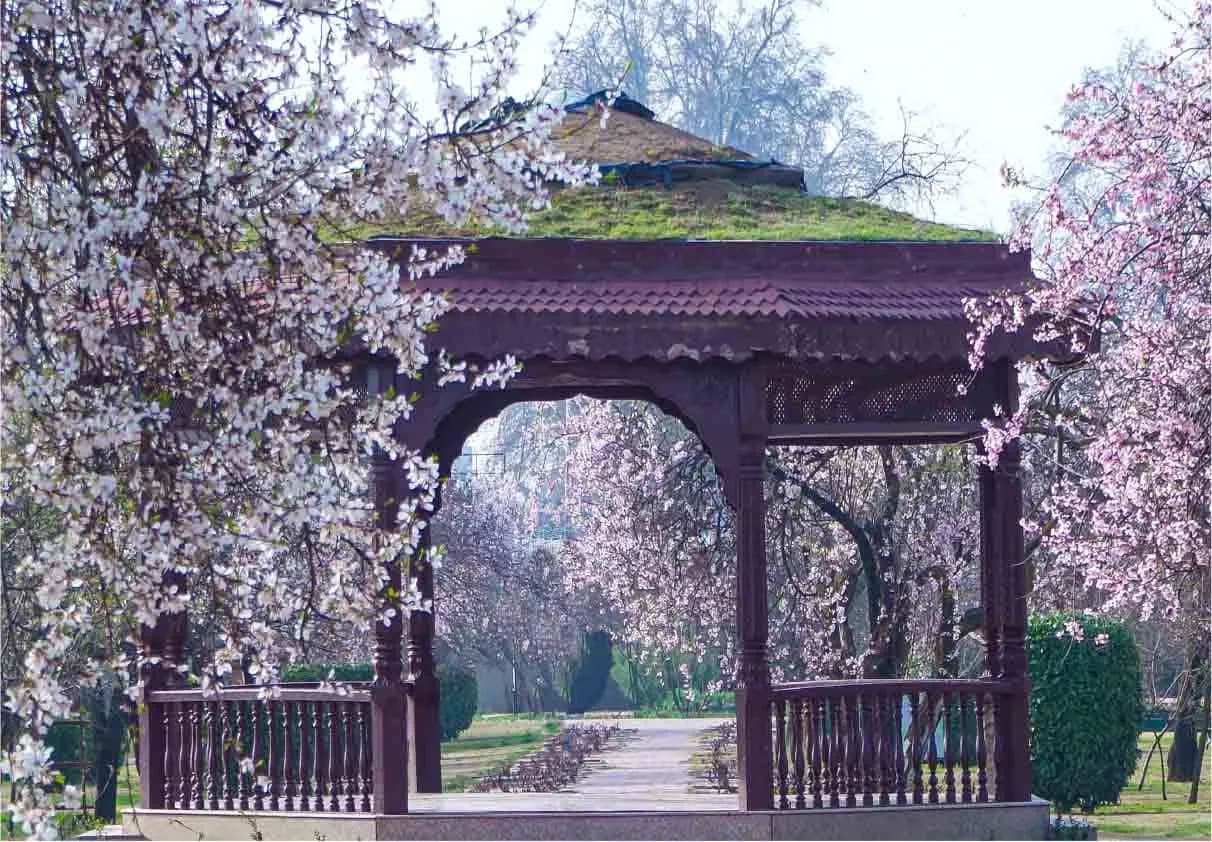
What Makes Badamwari Garden Special During Spring
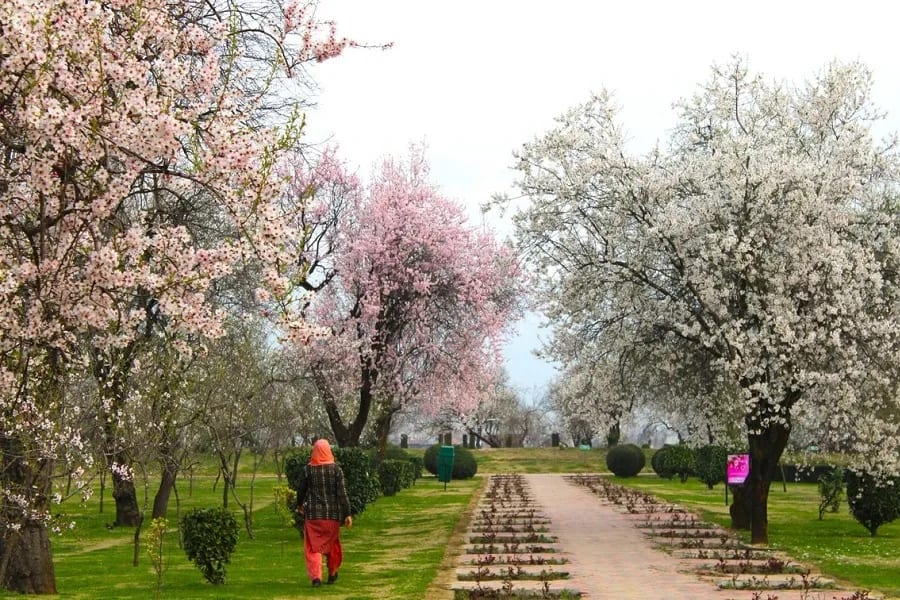
Badamwari, which literally translates to "almond grove" in Kashmiri, is not your typical manicured tourist garden. It sits on the slopes of the Hari Parbat hill, inside the old quarters of Srinagar, and carries a sense of history that most other gardens in the valley simply cannot match. The garden is believed to date back to the Mughal era, and the ancient almond trees standing here have witnessed centuries of Kashmir's changing seasons.
What sets Badamwari apart from more famous gardens like Nishat or Shalimar is its raw, unhurried atmosphere. The blossoms here arrive earlier than almost anywhere else in the valley, long before the famous tulip festival begins at Indira Gandhi Memorial Tulip Garden. This means you get to experience a Kashmir spring that is still quiet, still local, and still wonderfully unspoiled by peak-season crowds.
The garden is layered across terraced hillside plots, and when the almond trees bloom, the view from the upper terraces looking down over the flowering canopy toward the Dal Lake and the Zabarwan mountains behind it is genuinely unforgettable. Locals come here for morning walks, young couples stroll through the narrow paths, and vendors sell warm noon chai from small stalls near the entrance. The whole scene feels more like a living neighbourhood garden than a tourist attraction, and that authenticity is exactly what makes it so special.
Beyond the almonds, you will also find early spring wildflowers beginning to appear along the garden pathways, and the surrounding Hari Parbat fort adds a dramatic stone silhouette to the backdrop of your photographs. The combination of blossoms, fort, mountain views, and old-city character makes Badamwari a genuinely unique experience in Kashmir.
Exact Bloom Timing in 2026: When to Visit Badamwari Garden
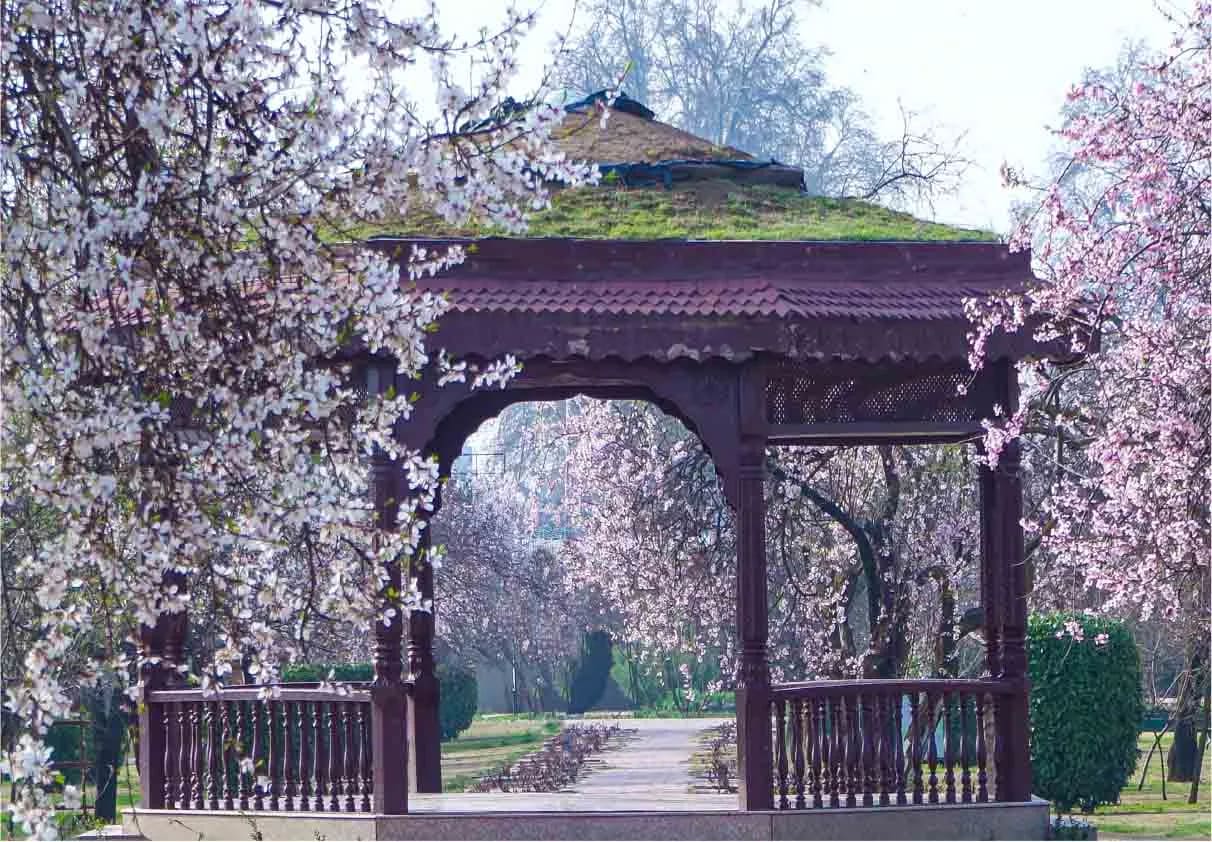
Timing is everything when it comes to Badamwari Garden. Visit too early, and the buds will still be tight. Visit too lat,e and the blossoms will have already fallen, carpeting the ground in white petals. Based on historical bloom patterns and local knowledge, here is what you can expect for 2026.
Almond blossoms at Badamwari typically begin to open in late February, often around the third or fourth week of the month. Peak bloom, when the trees are fullest and most photogenic, usually falls between late February and the second week of March. By mid-March, the blossoms begin to thin out, though the garden remains pleasant well into the month as other early spring plants begin to emerge.
For 2026 specifically, aim for the window between February 22 and March 10 for the best chance of catching peak bloom. That said, Kashmir's weather can be unpredictable in late winter. A late snowfall or an early warm spell can shift the timing by several days in either direction. If you are travelling specifically for the bloom, it is worth checking local updates from Srinagar closer to your travel dates.
The best days within that window are overcast ones for photography, or bright mornings right after a clear night. Early morning visits, between 7 AM and 10 AM, offer the softest light and the fewest visitors. Late afternoons, around 4 PM onward, can also be beautiful as golden hour light filters through the blossoms. Midday visits during sunny days tend to be harsher for photography but are perfectly enjoyable for a leisurely walk.
One important note: Badamwari is one of the earliest spring bloom events in Kashmir, preceding the tulip garden bloom by three to four weeks on average. If you are planning to catch both, structure your Kashmir itinerary so that Badamwari comes first in late February or early March, and the tulip garden follows in mid to late March or early April.
How to Reach Badamwari Garden from Srinagar City
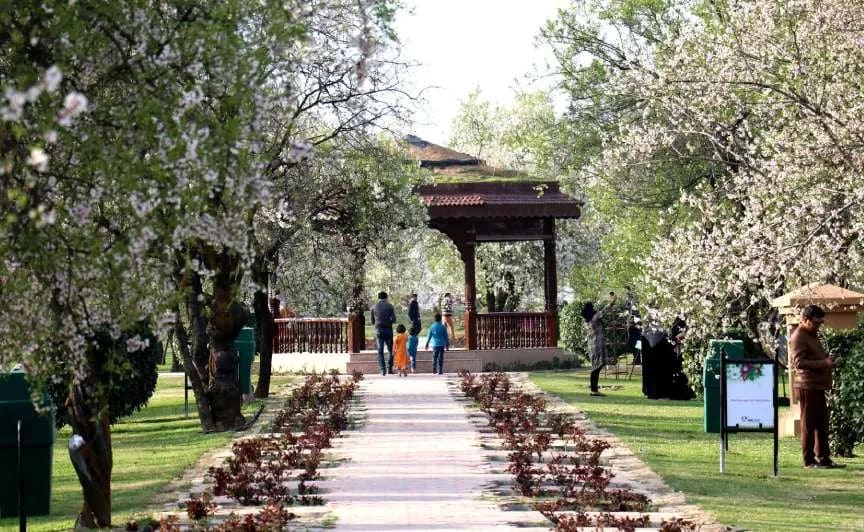
Badamwari Garden is located in the old city area of Srinagar, near the base of Hari ParbaFortrt. The address most commonly used is the Rainawari neighbourhood, and the garden entrance sits close to the Makhdoom Sahib shrine road. It is accessible from most parts of Srinagar within 20 to 40 minutes, depending on where you are staying.
If you are staying in the Dal Lake houseboat area or along Boulevard Road, the most convenient route is via Rainawari, heading toward the Hari Parbat area. The drive typically takes around 20 to 25 minutes by taxi or auto-rickshaw.
From the city centre near Lal Chowk, the garden is approximately 3 to 4 kilometres away. You can hire a local auto-rickshaw for around Rs. 80 to Rs. 150 for the one-way trip, or use a taxi app or hotel-arranged cab for a more comfortable journey. Shared autorickshaws also ply routes through Rainawari if you are comfortable navigating the old city streets.
Parking near the garden entrance is limited, especially during peak bloom days when local visitors arrive in larger numbers. If you are travelling by private cab, ask the driver to drop you at the entrance and return at a fixed time rather than waiting, as the lanes near Hari Parbat can get congested on busy mornings.
Walking into the old city from certain guesthouses near Nowhatta or Rajouri Kadal is also a good option. The narrow lanes of the old city leading to Badamwari are part of the experience, lined with traditional wooden architecture, small bakeries, and the smell of fresh bread from kangri-warmed shops in the early morning.
Photography at Badamwari: Best Spots and Lighting Windows
Source: Wikipedia
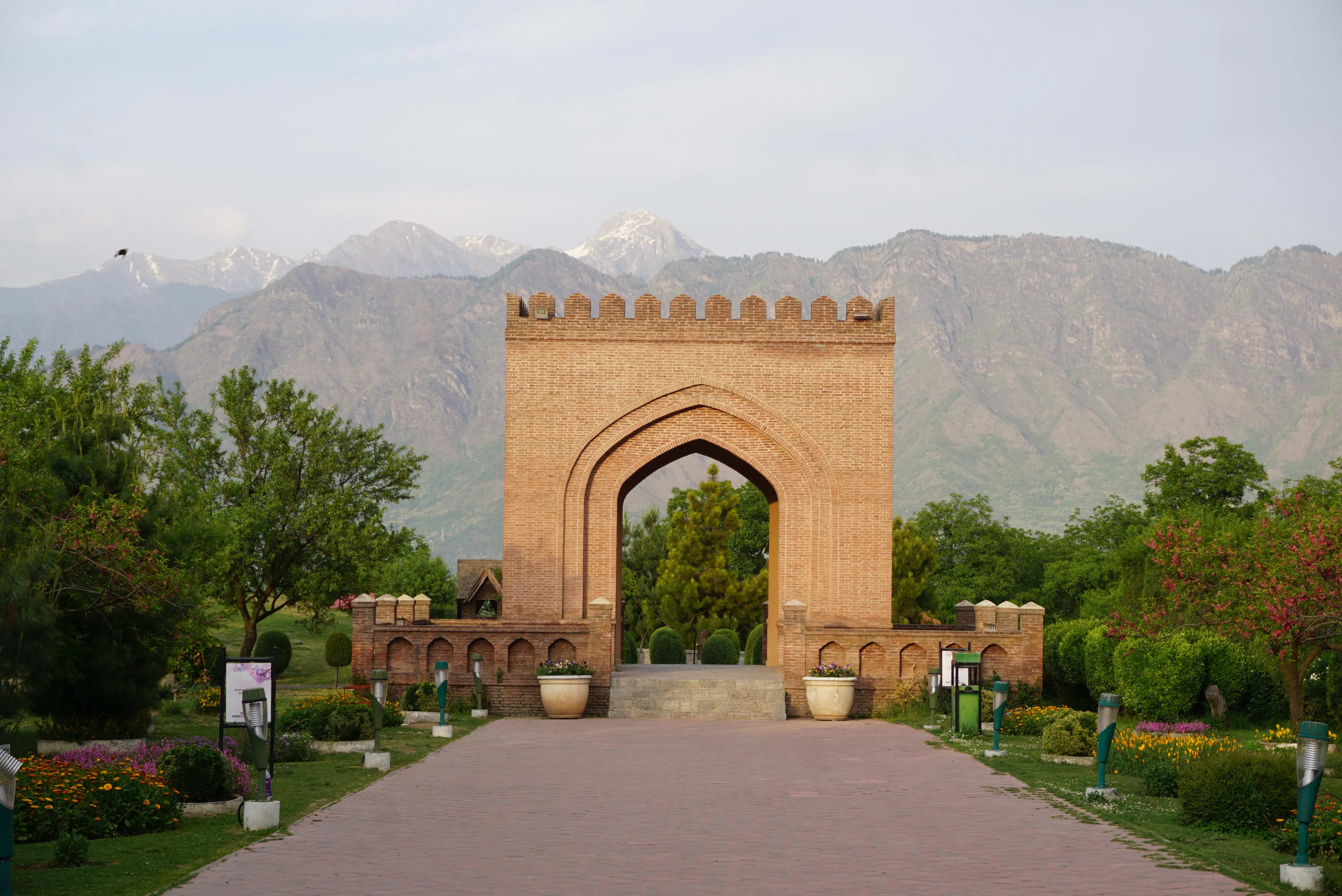
Badamwari Garden is a photographer's favourite for good reason. The layered terraces, the gnarled old almond trunks, the fort rising above the trees, and the distant mountain backdrop all come together to create a scene that works beautifully in almost any frame. Whether you are shooting on a DSLR, a mirrorless camera, or a modern smartphone, you will find plenty of compelling compositions here.
The best spot in the garden for wide-angle shots is from the upper terrace looking downhill. Position yourself so the almond canopy fills the foreground,d and the Hari Parbat fort appears in the upper left or right of your frame. On a clear morning, the Zabarwan range can also be visible in the far background, giving you a classic Kashmir layered shot of blossoms, fort, and snow-dusted peaks.
For close-up and detail shots, walk slowly along the garden's inner pathways where older almond trees have particularly gnarled and textured trunks. The contrast between the rough, dark bark and the soft pink-white blossoms makes for striking macro and semi-macro photographs. Overcast skies are your best friend for this type of shot, as they diffuse harsh shadows and let the blossom colours pop cleanly.
Golden hour in the morning, roughly between 7 AM and 9 AM in late February, offers warm, directional light that glows through the petals beautifully when you shoot with the light source behind the blossoms. Try positioning yourself so the sun is at a slight angle behind the tree crowns to get that translucent petal glow effect.
For portrait photography with the blossoms as backdrop, the lower terraces and the main walking paths offer cleaner, less cluttered backgrounds. Early morning, before local visitors arrive in numbers, gives you the best chance of open, crowd-free compositions. By 10 AM on weekends and holidays, the garden can become quite busy, which adds a lively local atmosphere but makes clean landscape shots more challenging.
One tip worth keeping in mind: bring a small step stool or use the natural elevation changes in the terraced garden to vary your shooting angles. Getting even slightly above ground level opens up completely different views through the blossom canopy and helps separate subjects from the background more effectively.
What Else to Do Near Badamwari Garden on the Same Day
Badamwari Garden sits in the heart of old Srinagar, which means a single morning visit can anchor a full day of exploration without needing a vehicle for every stop. The surrounding area rewards slow walkers with centuries of history, food, and colour packed into a compact radius.
Hari Parbat Fort
The hilltop fort that watches over Badamwari is only a short climb away. Built under Mughal governor Ata Muhammad Khan in the 18th century, it offers sweeping views of the valley and the Zabarwan Range. Entry requires a permit, so carry your ID. Morning light here after a Badamwari session is genuinely stunning.
Makhdoom Sahib Shrine
Tucked into the slope of Hari Parbat, this revered shrine draws both pilgrims and curious visitors. The approach through narrow lanes lined with vendors selling dried fruits and prayer beads is an experience in itself. Remove footwear before entering and dress modestly.
Nowhatta and Old City Lanes
A fifteen-minute walk from the garden drops you into the old city bazaar network. Nowhatta is famous for traditional Kashmiri pherans, paper-mache crafts, and wood carving workshops. Watching artisans at work costs nothing and teaches more about Kashmir than most museum visits.
Shah Hamdan Mosque (Khanqah-e-Moula)
One of the oldest wooden mosques in Kashmir, this structure on the eastern bank of the Jhelum is worth seeing for its all-wood architecture and the painted interiors visible through outer corridors. Non-Muslims may view from outside, which is impressive enough.
Suggested Same-Day Route
Time Slot | Activity | Walking Distance from Badamwari |
|---|---|---|
6:30 AM - 9:00 AM | Badamwari Garden bloom visit and photography | Base location |
9:00 AM - 11:00 AM | Hari Parbat Fort and Makhdoom Sahib Shrine | 10 to 15 minutes on foot |
11:00 AM - 1:00 PM | NowhattBazaarar, craft workshops, local lunch | 15 to 20 minutes on foot |
2:00 PM - 4:00 PM | Shah Hamdan Mosque and Jhelum riverfront walk | 25 minutes on foot or short auto ride |
4:30 PM onwards | Dal Lake shikara ride at golden hour | 20 minutes by auto from old city |
Practical Visitor Information: Entry, Timings, and What to Carry
Badamwari is one of the few major spring bloom sites in Srinagar that remains accessible and relatively crowd-free compared to Tulip Garden. Knowing the basics before you arrive saves time and prevents small frustrations.
Entry and Fees
Entry to Badamwari Garden has historically been free or nominally priced during the bloom season. Confirm current fees locally before visiting, as Jammu and Kashmir tourism authorities occasionally introduce seasonal charges.
There is no booking required. Simply arrive and walk in.
During peak bloom weekends, the garden can get crowded by mid-morning. Early entry is always the better choice.
Opening Hours During Spring
The garden typically opens around sunrise and remains accessible until early evening.
The ideal window is between 6:30 AM and 10:00 AM for soft light, fewer crowds, and cooler temperatures.
Avoid visiting between noon and 3:00 PM during clear days, as harsh overhead light flattens the blossoms and crowds peak.
What to Carry
Warm layer: Early March mornings can drop to 3 to 6 degrees Celsius. A fleece or light jacket is essential until around 9:00 AM.
Comfortable footwear: Paths inside the garden are uneven in places. Avoid heels or thin-soled shoes.
Water and snacks: There are small vendors near the entrance, but options are limited early in the morning.
Camera or phone with a clean lens: Morning mist and dew can coat lenses quickly. Carry a soft cleaning cloth.
Cash: Most vendors and auto-rickshaws near the old city operate on cash only.
ID proof: Required if you plan to combine the visit with Hari Parbat Fort entry.
Sunscreen: By late morning, the sun gains strength even in early spring. Apply before heading out.
Accessibility Notes
The garden has gentle slopes but no dedicated wheelchair ramps. Visitors with mobility needs should come with support and be prepared for slightly uneven ground.
Restroom facilities near the main entrance are basic. Plan accordingly.
Mobile connectivity is generally stable in the area. You can use GPS and maps without issues.
Conclusion
Badamwari Garden during spring bloom is one of those quiet, unhurried experiences that stays with visitors long after the almond petals have fallen. Unlike the organized crowds at Tulip Garden, Badamwari offers something closer to the old Srinagar, where you walk under blossoming branches, hear morning prayers drifting from nearby shrines, and feel the city waking up around you. Timing is everything here. Visit in the last week of February or the first two weeks of March, arrive before 8:00 AM, and you will have the kind of morning that feels genuinely rare.
If you are planning a Kashmir spring trip and want to build your itinerary around the bloom calendar, Kashmir Holidays publishes regularly updated seasonal guides covering not just Badamwari but all the major spring bloom sites across Srinagar and the valley. Use that information to stack your days well, combine Badamwari with the old city, and leave enough flexibility for the weather. Spring in Kashmir rewards those who arrive prepared and linger without rushing.
Frequently Asked Questions
Is Badamwari Garden free to enter during the spring bloom season?
Entry has traditionally been free or very low-cost, but seasonal charges are sometimes introduced by local authorities. It is worth confirming the current fee situation with your hotel or a local contact before visiting, especially during peak bloom weekends in early March when footfall increases noticeably.
How long does the almond blossom season last at Badamwari?each year slightly
The almond blossom season at Badamwari typically lasts two to three weeks. Peak bloom usually falls between late February and the second week of March. Exact timing shifts slightly each year depending on winter temperatures and early spring conditions, so checking closer to your travel date is always advisable.
Can I visit Badamwari Garden and Tulip Garden on the same day?
Yes, but note that their bloom seasons do not fully overlap. Almond blossoms at Badamwari peak in late February to early March, while Tulip Garden typically blooms from late March through April. Planning visits on separate days or during the brief overlap window in mid-March gives you the best experience at both sites.
What is the best time of day to visit Badamwari Garden for photography?
The golden hour after sunrise, roughly between 6:30 AM and 8:30 AM, gives the best soft, warm light for photographing almond blossoms. Crowds are minimal, the air is cool and often misty, and the white and pale pink flowers glow beautifully against the early sky. Avoid midday visits for photography.
Is Badamwari Garden suitable for families with young children?
Yes, Badamwari is a pleasant and safe outing for families. The garden is open, the paths are walkable, and the atmosphere during spring is festive and calm. Bring snacks and water for children, dress them in warm layers for early morning visits, and pair the trip with a short walk through the nearby old city lanes.